Advanced techniques
When we speak of advanced techniques in disciplines like Yoga, Pilates, or functional movement, there is a common misconception that this implies acrobatic complexity or extreme contortion. In reality, true advancement is defined by the refinement of awareness, the precision of internal mechanics, and the ability to control the body’s nervous system. It is the shift from merely mimicking a shape to fully embodying the function of that shape.
This resource explores the subtle yet profound shifts that transform a beginner’s practice into an advanced discipline. Whether you are looking to bridge the gap between gym strength and usable mobility, or seeking to understand the physiological nuances of breath retention, these techniques focus on quality, longevity, and deep internal sensing.
Refining Core Stability and Spinal Health
Many practitioners equate a strong core with visible abdominal muscles, yet there is a significant physiological difference between the « six-pack » (rectus abdominis) and the deep stabilizers that actually protect the spine. Advanced technique requires moving beyond superficial aesthetic goals to understand functional stability.
To truly stabilize the spine, particularly for dynamic movements or long-term health, one must learn to engage the transverse abdominis and pelvic floor without creating unnecessary tension elsewhere, such as in the hip flexors. This distinction is crucial when comparing exercises like static Planks versus dynamic Dead Bugs.
- Deep Stabilization: Learning to brace the spine during movement (like carrying heavy bags) rather than just holding tension while stationary.
- Injury Prevention: Understanding how sitting still can damage the spine more than movement, and retraining the body to notice slumping before pain signals arise.
- Pilates Principles: focusing on the intrinsic muscles you cannot see, which are responsible for posture and alignment, rather than the global movers.
The Subtle Art of Precision Alignment
As practice matures, the focus shifts from « doingthepose » to understanding how minute adjustments alter the entire energetic and mechanical structure of the body. Why does moving a foot just two centimeters completely change the sensation of a posture? This is the realm of proprioception.
Internal Sensing vs. External Correction
An advanced practitioner does not wait for a teacher to correct them; they develop the sensitivity to feel misalignments from the inside. This involves understanding the rotational mechanics of the joints—such as what happens to the knee when the thigh rotates five degrees outward in a Warrior pose—and adjusting accordingly to prevent wear on the cartilage.
Strength in Static Holds
While Flow Yoga is popular for its cardiovascular benefits, traditional Hatha and Iyengar methodologies offer a different kind of challenge. Holding a pose like Warrior II for three minutes without shaking requires a level of mental endurance and muscular efficiency that rapid movement can sometimes bypass. It requires distinguishing between muscular engagement and mere gripping or hanging on the joints.
Active Mobility: Control Over Flexibility
One of the most critical concepts in advanced movement is the distinction between passive flexibility (how far you can be pushed) and active mobility (how far you can control your movement). Having flexibility that you cannot control is often a liability that leads to instability and injury.
To progress, one must focus on strengthening the end-range of motion. This answers the common paradox: « WhycanItouchmytoesbutcannotkickabovemywaist? »
- Weighted Mobility: Using resistance at the end of a stretch to tell the nervous system that this range is safe and usable.
- Usable Strength: Strengthening the bottom position of a squat so that flexibility becomes functional rather than passive.
- Joint Health: Prioritizing cartilage health during warm-ups rather than rushing into deep stretches cold.
Mastering the Breath: From Awareness to Retention
Breathing is the bridge between the physical body and the nervous system. While beginners focus on maintaining a steady rhythm, advanced techniques introduce controlled manipulation of the breath (Pranayama) to influence energy levels and mental states.
The Mechanics of Diaphragmatic Breathing
Effective breathing is physically impossible if the surrounding musculature, particularly the hip flexors and abdominals, are habitually tight. A common mistake is « bellybreathing » where the practitioner distends the stomach physically without actually engaging the diaphragm. True diaphragmatic breathing requires a release of deep tension to allow the breath to descend naturally.
Advanced Pranayama and Retention
Once simple awareness is established, practitioners can explore more complex techniques like Kumbhaka (breath retention). There is a specific science to extending a comfortable breath hold from 10 seconds to 45 seconds over time. This practice helps regulate the CO2 tolerance of the body and calms the nervous system.
- Ujjayi: Used to build internal heat and focus during asana practice.
- Kapalabhati: An energizing technique useful for waking up the nervous system.
- Nadi Shodhana: A balancing practice ideal for calming the mind before sleep or meditation.
Deepening Practice with Props and Stillness
Finally, advanced technique is characterized by the intelligent use of props—not as crutches, but as tools for deeper feedback. Whether it is using a bolster to transform a seated forward fold or using blocks to access new muscle engagements, props allow for longer holds and deeper fascial release.
Fascia, the connective tissue wrapping our muscles, responds differently than muscle tissue; it requires time and passive load to change. This is why Restorative Yoga and long-held Yin postures are essential counterparts to dynamic movement, allowing the body to process and integrate the strength built during active practice.

Why Does Your Lower Back Hurt After Pilates When It Is Supposed to Help Your Back?
Your post-Pilates back pain isn’t a failure of the method, but a sign you’re using the wrong muscles—mistaking superficial ‘six-pack’ work for the deep core stability your spine actually needs. True core function is « anti-movement » to protect the spine, not…
Lire la suite
Why a 10-Second Breath Hold Feels Like Suffocation (and How to Master It)
The intense panic you feel during a short breath hold isn’t about a lack of oxygen; it’s an oversensitive and misunderstood response to rising carbon dioxide (CO2) in your blood. Your body’s urge to breathe is primarily triggered by CO2…
Lire la suite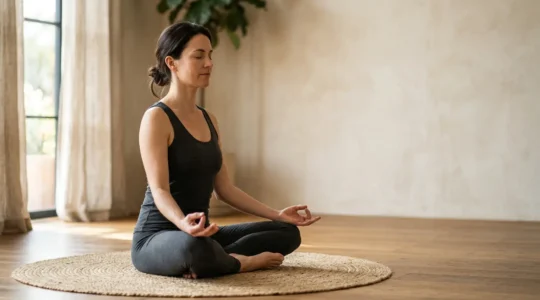
Why Does Your Teacher Say to Breathe Slowly but Your Body Wants to Breathe Fast?
Feeling frustrated when ‘slow breathing’ in yoga class makes you feel anxious or dizzy? This isn’t a failure in your practice, but a physiological signal from your nervous system. This guide decodes that signal, explaining the role of CO2 tolerance…
Lire la suite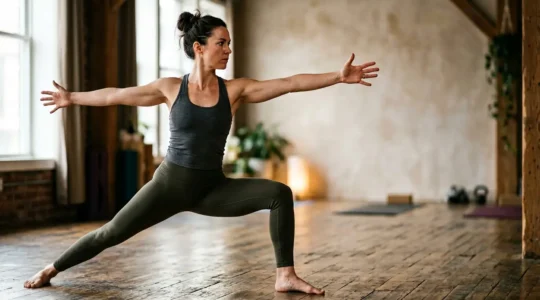
Why Do Traditional Hatha Poses Feel Harder Than Flow Yoga Despite Being Slower?
Contrary to the popular belief that slowness equals ease, the challenge of classical Hatha yoga lies in its deliberate stillness. This article dismantles the misconception of Hatha as « beginner’s yoga, » revealing it as an advanced practice of internal mastery. You…
Lire la suite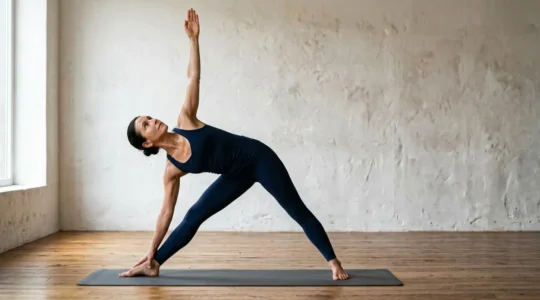
Why Do Iyengar Teachers Spend 10 Minutes on a Single Pose When Others Do 10 Poses?
Contrary to the belief that Iyengar Yoga’s long holds are merely slow and passive, they are a potent technology for rewiring your body’s deep intelligence. Holding poses isn’t about endurance; it’s about « neuromuscular engraving, » creating precise, lasting alignment patterns that…
Lire la suite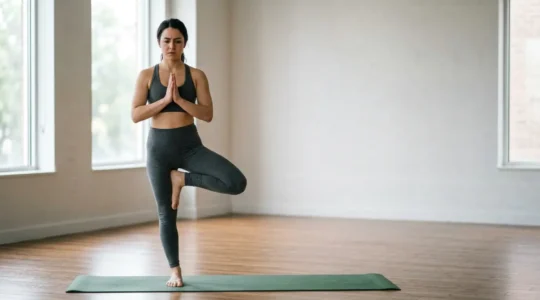
Why Do You Keep Losing Balance in Tree Pose Even After Years of Practice?
Your recurring balance issues aren’t a sign of weakness, but a symptom of ‘proprioceptive neglect’—a fixable disconnect between your brain and body. Lasting stability comes from training a trainable ‘sixth sense’ called proprioception, not just from muscle strength or focus….
Lire la suite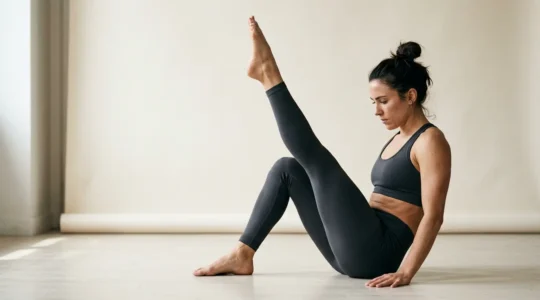
Why Can You Touch Your Toes in the Morning but Cannot Kick Above Your Waist?
The frustrating gap between your passive flexibility and active movement isn’t a muscular issue—it’s a neurological one. Your brain restricts movement in ranges where it doesn’t feel strong and in control, creating a « motor control gap. » Static stretching alone can…
Lire la suite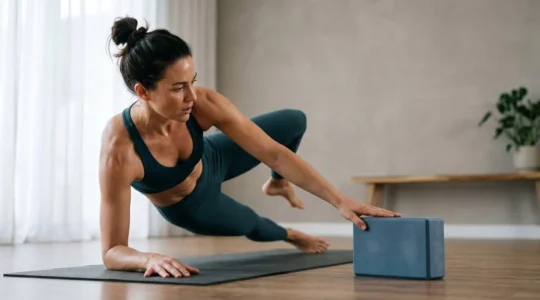
Why Can You Hold a Plank for 2 Minutes but Struggle to Carry Shopping Bags Up Stairs?
The strength you build in the gym often fails in daily life because it’s built in a stable, predictable bubble. Real-world strength is a neurological skill for managing instability. Gym strength focuses on isolating muscles, while functional strength integrates them…
Lire la suite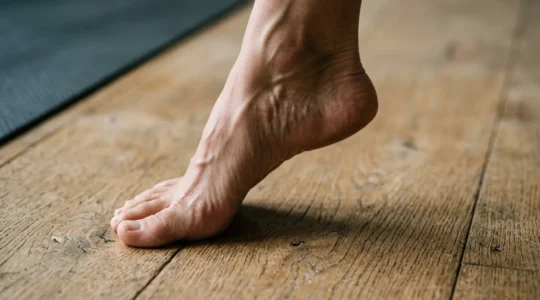
Why Does Moving Your Foot 2cm Completely Change How a Pose Feels?
Contrary to popular belief, mastering a yoga pose isn’t about achieving a perfect external shape. It’s about developing sensory intelligence to feel how a millimeter-sized adjustment creates a cascade of stability through your entire body. The real transformation is internal,…
Lire la suite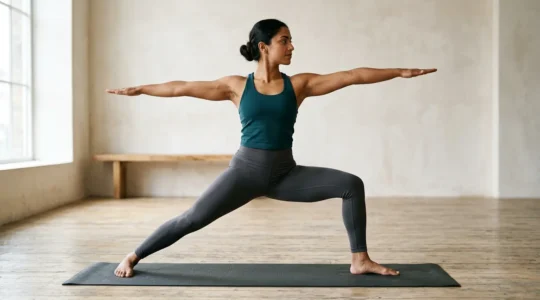
Why Does Your Warrior II Still Feel Unstable After 2 Years of Regular Practice?
Contrary to common belief, instability in long-held yoga poses isn’t a sign you need more strength or flexibility. The real issue is often a disconnected « proprioceptive dialogue » between your brain and your body. This article reframes your practice, moving you…
Lire la suite