Contrary to the popular belief that slowness equals ease, the challenge of classical Hatha yoga lies in its deliberate stillness. This article dismantles the misconception of Hatha as « beginner’s yoga, » revealing it as an advanced practice of internal mastery. You will discover that sustained holds are not a lack of action but a profound method for building neuromuscular strength, regulating the nervous system, and transforming each pose into an « interoceptive laboratory »—a level of intensity that dynamic movement often bypasses.
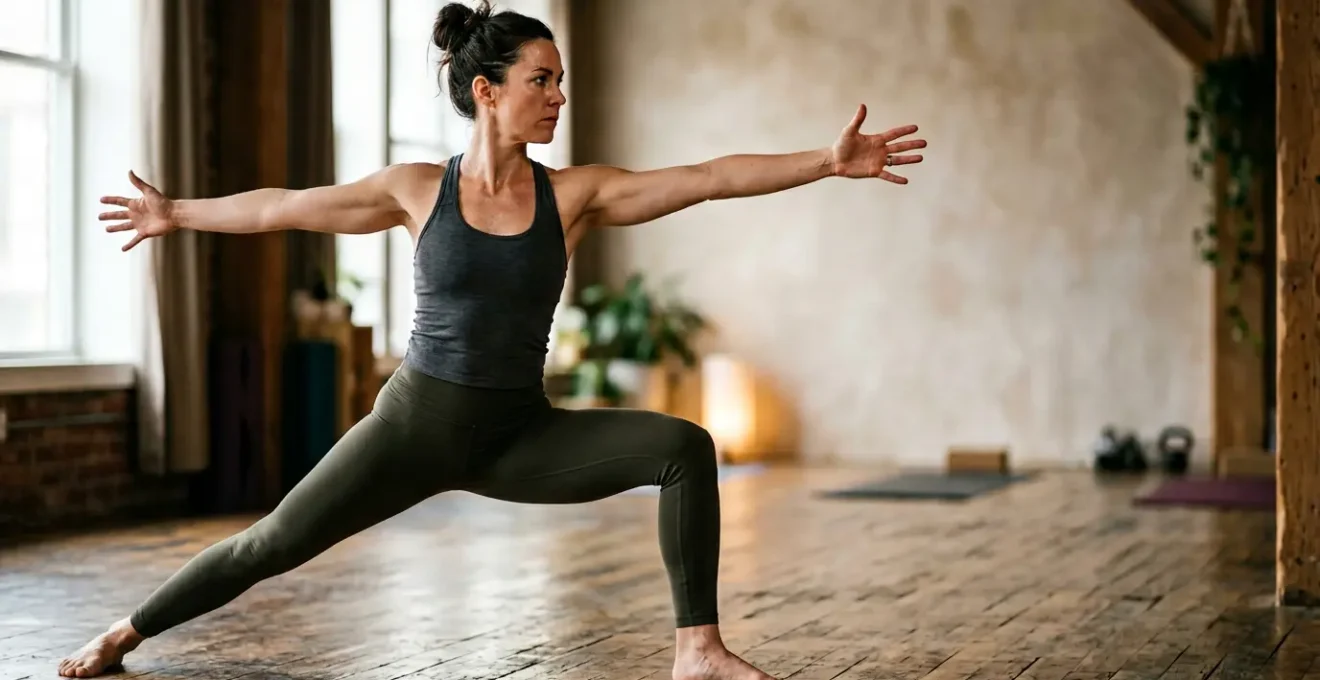
For the practitioner accustomed to the rhythmic pulse of Vinyasa, the first encounter with a traditional Hatha class can be a humbling experience. You arrive prepared for a « gentle » or « slow » session, only to find your muscles trembling in Warrior II minutes after the flow-addicted mind has started screaming for the next transition. The sweat is real, the effort is immense, and the central question emerges: Why does a practice with less movement feel exponentially more difficult?
The modern yoga landscape often equates intensity with speed and cardiovascular effort. We are conditioned to measure a workout by its pace, the seamlessness of its transitions, and the complexity of its choreography. This framework, however, fails to grasp the fundamental objective of classical Hatha. The difficulty is not an accident; it is the entire point. It signals a shift in focus from the external shape of a sequence to the internal, cellular-level experience of a single, sustained form.
If you’ve ever felt that Hatha’s stillness was a void to be filled, this guide will reframe it as a space of profound work. We will move beyond the misconception of Hatha as merely « beginner yoga » and explore the rigorous science and philosophy that make its slowness a source of incredible power. This is not about choosing one style over another, but about understanding the distinct purpose behind the pace.
This article will deconstruct the challenge, examining the physiological demands of isometric holds, the specific ways Hatha and Vinyasa regulate anxiety, and the deep alignment principles that underpin advanced practice. By understanding the « why » behind the stillness, you can unlock a new dimension of strength, stability, and self-awareness in your practice.
Contents: The Stillness Paradox: A Deep Dive into Hatha’s Intensity
- What Makes a Pose Genuinely Hatha When Every Style Claims Traditional Roots?
- How to Build Enough Strength to Hold Warrior II for 3 Minutes Without Shaking?
- Hatha or Vinyasa: Which Style Better Serves Your Goal of Reducing Daily Anxiety?
- The Misconception That Hatha Is Just Gentle Yoga for Beginners
- How to Structure a 45-Minute Traditional Hatha Session That Covers All Pose Categories?
- What Must Your Standing Poses Demonstrate Before Attempting Arm Balances?
- Iyengar Sequences or Vinyasa Flow: Which Builds Better Alignment Over 6 Months?
- Why Do Iyengar Teachers Spend 10 Minutes on a Single Pose When Others Do 10 Poses?
What Makes a Pose Genuinely Hatha When Every Style Claims Traditional Roots?
In a world where every yoga studio claims « traditional » roots, the term « Hatha » has become a catch-all for any slow or foundational physical practice. However, its classical definition is far more specific and rigorous. A pose becomes genuinely Hatha not just by being held statically, but by being integrated into a larger system aimed at mastering the physical body as a vehicle for higher consciousness. Historical analysis shows that while Patanjali’s Yoga Sutras focused primarily on meditation, Hatha Yoga emerged centuries later to emphasize the body as a crucial tool.
As the Britannica Encyclopedia notes, true Hatha extends beyond asana, placing « great importance on diet, purificatory processes, regulation of breathing (Pranayama), and the adoption of bodily postures. » This means a pose is not an end in itself, but a container for breath control, mental focus, and energetic awareness. The slowness is not for rest; it is to provide the time needed to consciously direct Prana (life force energy) and observe its effects.
Therefore, a Hatha pose is distinguished by its intention. Are you simply holding a shape, or are you actively engaging with the subtle energies, breath patterns, and mental fluctuations within that shape? The transition from Vinyasa’s breath-cued movement to Hatha’s breath-infused stillness is a shift from doing many things externally to doing one thing with profound internal depth. It is this depth, not the lack of movement, that defines the practice.
How to Build Enough Strength to Hold Warrior II for 3 Minutes Without Shaking?
The trembling that begins in your thighs a minute into Warrior II is a common and revealing experience. It exposes a different kind of weakness that a fast-paced flow can effectively mask. Vinyasa builds dynamic strength and cardiovascular endurance, but classical Hatha cultivates isometric strength and muscular endurance—the ability to hold a static contraction for a prolonged period. This is the bedrock of stability.
The science is clear: holding poses works. A controlled study on Hatha yoga practitioners demonstrated that isometric training can lead to a 19-31% increase in muscular strength over just eight weeks, with significant gains in both strength and endurance. This happens because sustained holds recruit slow-twitch muscle fibers, which are responsible for endurance and are often undertrained in explosive, fast-movement exercises.

Building this capacity isn’t about « toughing it out. » It’s about systematic training. You must learn to create a tensegrity structure, where you actively root down through the feet while simultaneously lifting up through the spine and extending through the arms. This creates an intelligent, integrated network of tension and release, rather than a brute-force clenching of muscles. Your breath becomes the biofeedback tool, signaling when you’ve crossed the line from productive effort to stressful strain.
Action Plan: Progressive Isometric Hold Protocol for Extended Pose Endurance
- Weeks 1-2 (Foundation): Hold Warrior II for 30-second intervals with 15-second rest. Repeat 3 times per side to build slow-twitch muscle fiber endurance.
- Weeks 3-4 (Breath Integration): Extend holds to 45 seconds with 15-second rest. Incorporate slow, diaphragmatic breathing (e.g., 4-second inhale, 6-second exhale) to calm the nervous system.
- Weeks 5-6 (Active Engagement): Practice 60-second holds. Focus on the principle of ‘rooting and rebounding’—actively press the feet down while lifting energy up through the spine and arms.
- Weeks 7-8 (Sustained Focus): Progress to 90-second holds. The goal is to maintain full engagement without creating unnecessary tension in the jaw, neck, or shoulders. Use the breath as a guide.
- Advanced Progression (Mastery): Build towards 3-minute holds by adding 15-30 seconds each week. Prioritize maintaining impeccable form over forcing the duration.
Hatha or Vinyasa: Which Style Better Serves Your Goal of Reducing Daily Anxiety?
Both Hatha and Vinyasa are powerful tools for managing anxiety, but they operate on the nervous system in distinct ways. Understanding this difference is key to choosing the right practice for your specific state of mind. Indeed, a 2024 systematic review published in Frontiers in Psychiatry found that yoga can improve the condition of the parasympathetic nervous system, thereby reducing anxiety. The question is which style’s mechanism is best for you.
Vinyasa, with its continuous movement and rhythmic breathing, can be excellent for providing sympathetic catharsis. When you feel agitated, restless, or full of nervous energy, the dynamic flow helps to « burn off » the excess charge, leaving you feeling calmer and more centered afterward. It distracts the ruminating mind by demanding its full attention on the transition from one pose to the next.
Hatha, in contrast, works primarily through direct parasympathetic activation. Instead of burning off anxiety, it teaches you to sit with it, observe it without reaction, and actively calm the nervous system in the midst of it. The long, sustained holds and focus on slow, diaphragmatic breathing directly stimulate the vagus nerve, which is the primary pathway of the parasympathetic « rest and digest » system. This approach is more of a direct confrontation and training, building long-term resilience to triggers.
The following table, based on the differing mechanisms, can help you choose the right practice for the moment.
| Aspect | Hatha Yoga | Vinyasa Flow |
|---|---|---|
| Primary Mechanism | Parasympathetic activation through sustained holds and stillness | Sympathetic catharsis through dynamic movement |
| Breathing Pattern | Slow, diaphragmatic (4-6 second cycles) to activate vagus nerve | Rhythmic breath-to-movement synchronization |
| Best for Anxiety Type | Chronic underlying anxiety, rumination, interoceptive training | Agitated anxiety, excess nervous energy, mental distraction |
| Mental Approach | Confrontation – observing anxiety without reacting | Catharsis – burning off anxious energy through activity |
| Heart Rate Impact | Maintains 60% HRmax, gradual calming | Elevates to 70-80% HRmax, energy release then relaxation |
| Optimal Practice Time | Evening (prepares nervous system for sleep) | Morning/midday (matches natural active state) |
The Misconception That Hatha Is Just Gentle Yoga for Beginners
Perhaps the most persistent myth in modern yoga is that Hatha is synonymous with « easy » or « gentle, » a preparatory step before one can graduate to « real » yoga like Vinyasa or Ashtanga. This fundamental misunderstanding stems from equating slowness with a lack of intensity. The reality, backed by physiological data, is that a well-taught Hatha class can be exceptionally demanding.
The challenge is simply of a different nature. Instead of testing your cardiovascular system, it tests your muscular endurance, your mental fortitude, and your ability to maintain structural integrity under sustained load. A recent scientific study directly refutes the « gentle » label. Research measuring the intensity of Hatha yoga in practitioners found that the mean heart rate during intensive phases reached 60% of HRmax, with participants spending significant time in the moderate-intensity exercise range. This is far from a passive stretching session.
The difficulty is internal and therefore less visible to an outside observer. In Vinyasa, the struggle is often externalized through heavy breathing and fast movement. In Hatha, the battle is silent. It is the negotiation between the mind that wants to exit the pose and the body’s capacity to remain. It is the constant micro-adjustments required to maintain alignment as fatigue sets in. It is the mental discipline to stay present with uncomfortable sensations without fidgeting or mentally checking out.
This is why experienced practitioners from other dynamic disciplines are often the most surprised by Hatha’s difficulty. Their bodies are trained for movement, not for the profound and demanding work of active stillness.
How to Structure a 45-Minute Traditional Hatha Session That Covers All Pose Categories?
A hallmark of a traditional Hatha practice is its completeness. Unlike classes that might focus only on hip openers or backbends, a classical session is a balanced « meal » for the body and nervous system. It follows the principle of Vinyasa Krama, which means a wise and logical progression. Every pose prepares for the next, and the entire sequence is designed to bring the body to a state of equilibrium.
Structuring a complete 45-minute session is a matter of intelligent sequencing, ensuring all major pose categories and spinal movements are addressed. This creates a holistic experience that leaves the practitioner feeling integrated and balanced, rather than overstimulated or depleted in one area. A proper session is a journey that begins with centering the mind and ends with absorbing the benefits in deep relaxation.
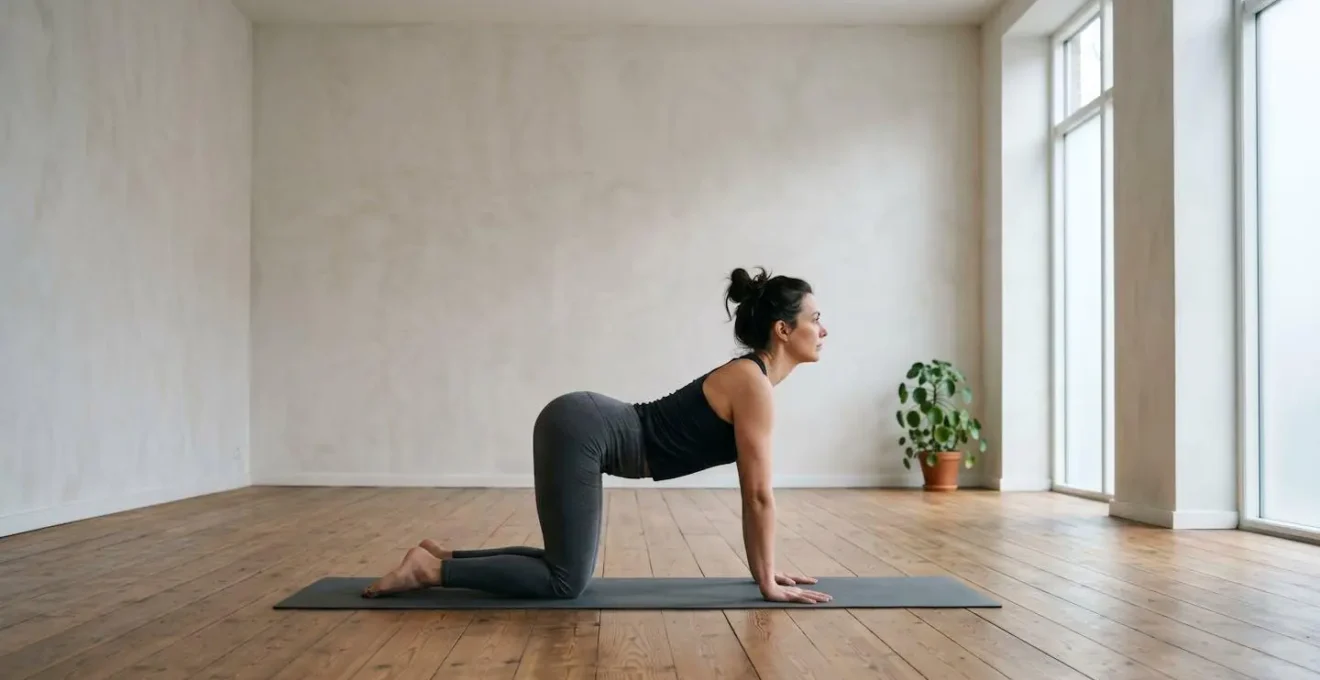
A well-structured session includes these non-negotiable components:
- Minutes 0-5: Centering & Pranayama. Begin seated with breath-control exercises (like Nadi Shodhana) to quiet the mind and activate the parasympathetic nervous system. Set an intention for the practice.
- Minutes 5-15: Warm-up (Surya Namaskar). Perform several rounds of classical Sun Salutations at a deliberate pace. This warms the entire body, links breath to movement, and prepares the spine.
- Minutes 15-35: Asana Progression. This is the core of the practice. Move through a sequence that includes all five spinal movements: flexion (forward folds), extension (backbends), lateral flexion (side bends), and rotation (twists). Include standing poses, seated poses, and an inversion (or preparation). Each pose should be held for 5-7 deep breaths.
- Minutes 35-40: Counterpose & Cool Down (Pratikriyasana). After a deep backbend like Ustrasana (Camel Pose), a neutralizing counterpose like Balasana (Child’s Pose) is essential to bring the spine back to a neutral position. This phase gently winds down the effort.
- Minutes 40-45: Savasana (Corpse Pose). This is the most crucial pose. Lying in stillness allows the nervous system to recalibrate and the body to integrate the physiological and energetic benefits of the practice. Skipping Savasana is like preparing a gourmet meal and not eating it.
What Must Your Standing Poses Demonstrate Before Attempting Arm Balances?
Many practitioners see arm balances like Bakasana (Crow Pose) as the pinnacle of yoga strength, a goal to be conquered. They jump into workshops, often with limited success and a high risk of wrist injury, without realizing that the true foundation for these « advanced » poses is built in the seemingly simple standing postures of Hatha yoga. Before you can float, you must be unshakeably grounded.
An arm balance is not about arm strength; it is a demonstration of total body integration, balance, and core control. Your standing poses are the training ground for these exact skills. Before attempting to balance your entire body weight on your hands, your Trikonasana (Triangle Pose) and Virabhadrasana II (Warrior II) must demonstrate several key qualities:
- Structural Integrity: Can you hold a standing pose for a full minute without fidgeting or losing alignment? This shows you have the muscular endurance and mental focus to maintain a stable structure under load.
- Active Foundation (Pada Bandha): Do you understand how to actively press through all four corners of your feet, creating a lift that travels up the entire leg? This same principle of creating a stable, active base applies directly to the hands (Hasta Bandha) in arm balances.
- Core Engagement (Uddiyana Bandha): Your standing poses must show a connection to your deep core. The ability to draw the lower belly in and up is what creates the lightness needed to lift off the ground. An arm balance is a floating forward fold, powered by the core.
- Proprioceptive Acuity: Hatha’s sustained holds refine your body’s internal sense of position and space. Research on body balance in yoga practitioners demonstrates that a 5-month Hatha yoga program significantly improved postural control, a skill essential for the delicate shifts of weight in arm balances. Your ability to balance on one leg in Vrksasana (Tree Pose) is a direct indicator of your readiness to balance on two hands.
Skipping this foundational work is like trying to build a roof without walls. The strength, stability, and intelligence required for arm balances are not developed in the arm balances themselves; they are forged in the fire of countless, consciously held standing poses.
Iyengar Sequences or Vinyasa Flow: Which Builds Better Alignment Over 6 Months?
The quest for « good alignment » is central to modern yoga, but different styles approach it with vastly different methodologies. Vinyasa Flow and Iyengar Yoga (a precise form of Hatha) represent two distinct ends of the motor learning spectrum. Choosing between them depends on your goal: do you want to build a precise, repeatable blueprint of a pose, or do you want to develop adaptive alignment that functions in dynamic situations?
As EkhartYoga aptly notes in their guide, « Iyengar yoga was founded by BKS Iyengar and has a strong focus on detail, precision and alignment in the yoga postures. The use of props such as straps, blocks, blankets and chairs is a major part of Iyengar Yoga. » This method uses what is known in motor learning as « blocked practice. » By holding a single pose for an extended time, often with props that provide external feedback, you are drilling one specific skill repeatedly. This is exceptionally effective for creating a detailed and accurate neuromuscular blueprint of the pose’s ideal form in your nervous system.
Vinyasa Flow, on the other hand, employs « random practice. » By moving through a variety of poses and transitions, you are constantly solving new alignment puzzles. The feedback is internal—based on sensation and breath. This method is less about finding one « perfect » external form and more about learning how to maintain core principles of alignment (like a stable pelvis and elongated spine) while in motion. It builds adaptive, resilient alignment.
Over a six-month period, the outcomes will differ. The Iyengar practitioner will likely be able to execute a near-perfect Trikonasana with profound knowledge of its every detail. The Vinyasa practitioner will be able to fluidly transition from Warrior I to Warrior III while maintaining stability and breath. Neither is superior, but their purposes are different, as this comparison shows.
| Factor | Iyengar Approach | Vinyasa Flow Approach |
|---|---|---|
| Learning Method | Blocked practice (repeating one skill) | Random practice (mixing skills) |
| Feedback Mechanism | Props provide constant external alignment cues | Internal sensation and breath provide feedback |
| Alignment Focus | External alignment (e.g., ‘outer ankle parallel to mat’) | Internal alignment (e.g., ‘feel energy spiral up leg’) |
| Best for Building | Precise neuromuscular pathways, ‘blueprint’ of form | Adaptive alignment in dynamic, unpredictable situations |
| 6-Month Outcome | Deep precision in static forms | Fluid adaptation across movement patterns |
| Optimal Student | Detail-oriented learners, those recovering from injury | Kinesthetic learners, those with baseline body awareness |
Key Takeaways
- Hatha’s difficulty lies in its objective: a shift from the external performance of movement to the internal mastery of stillness.
- Sustained isometric holds are a scientifically proven method for building profound muscular strength and endurance, targeting fibers that dynamic flows often miss.
- Stillness is an advanced tool for deep interoceptive work, transforming each pose into a laboratory for observing the mind and regulating the nervous system.
Why Do Iyengar Teachers Spend 10 Minutes on a Single Pose When Others Do 10 Poses?
For the uninitiated, watching an Iyengar class can be baffling. A teacher might spend ten minutes or more guiding a room full of students through the intricate details of a single pose like Parsvakonasana (Side Angle Pose). To a mind conditioned by Vinyasa’s pace, this can seem tedious or excessive. But this extended duration is not arbitrary; it is the key that unlocks the deepest therapeutic and meditative potential of Hatha yoga. It transforms the pose from a simple physical stretch into an interoceptive laboratory.
The historical context is crucial. As the 15th-century manual, the Hatha Yoga Pradipika, explains, the physical practices of Hatha were designed specifically to prepare the body and mind for very long periods of meditation. The goal of a 10-minute hold is not simply to stretch a muscle. It is to allow time for the Prana to penetrate beyond the superficial musculature and into the deeper tissues: the fascia, ligaments, tendons, and even the internal organs. This level of physiological exploration is impossible in a 3-breath hold.
Within this « laboratory, » the practitioner begins to explore profound subtleties. How does a micro-adjustment of the back foot’s angle change the sensation in the hip? How does the pose affect the rhythm of the breath? Can you direct breath into the compressed side of the torso? This cellular-level breathing and tissue exploration moves the practice from the realm of exercise into the realm of therapeutics. It is no longer about « doing a pose » but about becoming a living, breathing inquiry into the pose’s effect on your entire being.
This is the ultimate answer to why Hatha feels harder. The work is not in moving from A to B. The work is in staying at A and exploring its infinite depths. It demands a level of patience, focus, and sensitivity that constant motion allows us to avoid.
Your next Hatha class is not a step back or a « day off » from your real practice. It is an invitation to go deeper. Approach the stillness not as an absence of movement, but as an opportunity for profound observation. When the shaking begins and the mind begs to escape, recognize it as the moment the real yoga begins. This is your opportunity to practice.