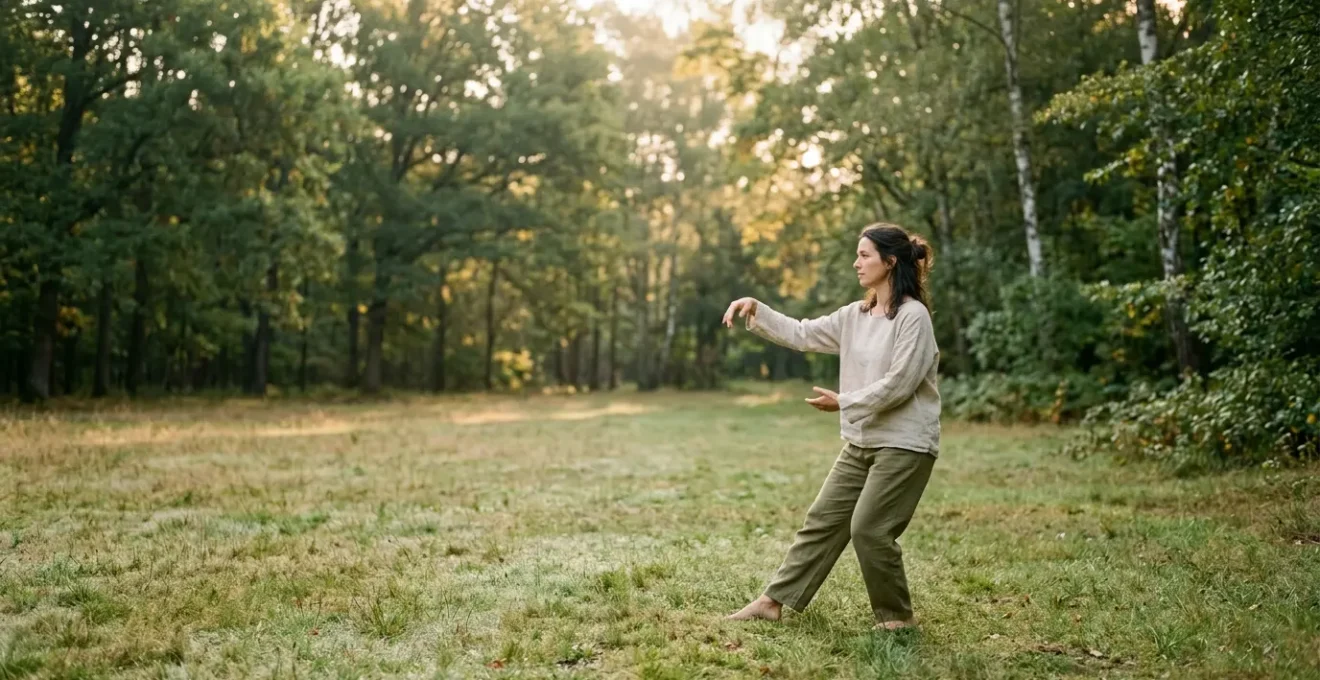
Contrary to the ‘no pain, no gain’ mantra, the key to lifelong fitness lies not in intensity, but in the intelligent, neurological, and structural adaptations fostered by gentle, consistent movement.
- Intense training can elevate stress hormones, while gentle practices are proven to improve nervous system regulation and reduce physiological cost.
- True strength is functional—the ability to perform daily tasks with ease—which is built through mindful movement, not just isolated muscle work.
Recommendation: Shift your focus from measuring workouts by sweat and exhaustion to valuing movement quality, consistency, and the development of a resilient, functional body.
For years, the fitness world has been dominated by a single, pervasive message: go harder, push further, and feel the burn. The high-intensity interval training (HIIT) revolution promised maximum results in minimum time, equating sweat with success and exhaustion with effectiveness. This paradigm has led many dedicated individuals to believe that if a workout isn’t punishing, it isn’t working. We celebrate the grueling hour at the gym, often overlooking the profound, lasting benefits of a more measured approach.
This mindset, however, ignores a fundamental truth about human physiology. Our bodies are not machines to be relentlessly driven; they are complex biological systems that adapt, learn, and thrive on consistency and intelligent stimuli. While intense exercise has its place, an exclusive focus on it can lead to burnout, injury, and a state of chronic stress that undermines long-term health. The constant pursuit of intensity overlooks the crucial role of the nervous system, the health of our connective tissues like fascia, and the development of true, usable strength that serves us throughout our lives.
But what if the most significant gains weren’t found in the final, breathless sprint, but in the deliberate, controlled, and gentle movements practiced consistently over time? This article challenges the prevailing « more is more » fitness culture by exploring the evidence-based reasons why gentle practices can deliver superior long-term results. We will dismantle the myth that gentle means ineffective and reveal how these methods are a sophisticated strategy for building a truly resilient, functional, and durable body for life.
We will delve into the science behind how gentle movement can outperform intense exercise, identify who benefits most from this approach, and provide a framework for choosing and progressing within practices like yoga, Pilates, and Tai Chi. This guide will reframe your entire understanding of what it means to be fit, shifting the goal from short-term performance to lifelong vitality.
Summary: The Long-Term Advantage of Gentle Exercise Over Intense Training
- Why Can 30 Minutes of Gentle Movement Outperform an Hour of Intense Exercise?
- Who Should Prioritise Low-Impact Exercise Over High-Intensity Training?
- Yoga, Pilates, Swimming or Tai Chi: Which Low-Impact Practice Suits Your Specific Needs?
- How to Embrace Gentle Practice When Part of You Feels Like It Is Not Real Exercise?
- How Do You Progress and Challenge Yourself Within Gentle Practices Over Years?
- What Is the Difference Between Gym Strength and Strength You Can Actually Use?
- Which Movements at 50 Predict Whether You Will Need Help Getting Dressed at 80?
- Why Can Some 70-Year-Olds Move Better Than Some 40-Year-Olds?
Why Can 30 Minutes of Gentle Movement Outperform an Hour of Intense Exercise?
The idea that less can be more in fitness directly contradicts the high-intensity ethos, yet the science points to a crucial factor often ignored in the calorie-counting equation: the nervous system. An hour of punishing exercise can flood the body with stress hormones like cortisol, which, if chronically elevated, contributes to inflammation, fatigue, and burnout. In contrast, 30 minutes of mindful, gentle movement can have the opposite effect, shifting the body from a ‘fight-or-flight’ state to a ‘rest-and-digest’ state. This is not just a feeling; it’s a measurable physiological event.
The key is the concept of vagal tone, a measure of the health of the vagus nerve, which is the primary controller of the parasympathetic nervous system. High vagal tone is associated with better stress resilience, lower inflammation, and improved recovery. Groundbreaking research demonstrates that exercise training increases vagal tone, with direct evidence of sustained increases in vagal preganglionic neuron activity. Gentle practices, with their focus on breath and mindful control, are exceptionally effective at stimulating this response.
While a HIIT session expends more energy acutely, the gentle session is investing in the long-term health of your entire operating system. As Dr. Leslie Crofford of Vanderbilt University Medical Center notes, « Gentle movement helps the brain become more accustomed to your body’s movements. » It’s a process of neurological adaptation, teaching the brain and body to work together more efficiently and safely. This efficiency reduces the physiological cost of movement over time, preserving energy and protecting joints. So, while the intense workout depletes resources, the gentle one builds a more resilient and efficient system for the future.
Who Should Prioritise Low-Impact Exercise Over High-Intensity Training?
The standard answer is often « seniors, pregnant women, or those with injuries. » While true, this framing is incredibly limiting and misses the point. The reality is that almost everyone, including elite athletes, should strategically prioritise low-impact, gentle exercise. It is not a « lesser » option but a different, vital tool for longevity, recovery, and addressing systemic issues that high-intensity training can exacerbate. For anyone dealing with chronic stress, poor sleep, hormonal imbalances, or autoimmune conditions, a high-intensity regimen can be like pouring fuel on a fire.
Individuals with chronic pain conditions are a prime example of where gentle practice isn’t just an alternative, but the primary path to improvement. High-impact and high-intensity work can trigger symptom flare-ups, creating a cycle of pain and exercise avoidance. Gentle movement breaks this cycle by offering non-threatening ways to move the body, improve blood flow, and retrain the brain’s pain signals. It creates a foundation of safety from which to build strength and confidence.
Case Study: The Power of Personalised Gentle Exercise for Fibromyalgia
The effectiveness of this approach is clearly demonstrated in clinical settings. For instance, an 18-week study on individuals with fibromyalgia, a condition characterized by widespread pain, fatigue, and cognitive challenges, yielded significant results. By implementing personalized, gentle exercise strategies tailored to each person’s tolerance levels, participants saw marked improvements in a wide range of their symptoms. This case highlights a critical principle: meeting the body where it is, rather than forcing it to conform to an arbitrary standard of intensity, is the key to sustainable progress, especially when facing systemic health challenges.
Ultimately, prioritizing low-impact exercise is a strategic choice for anyone playing the long game. It’s for the 30-year-old athlete who wants to be running at 60, the 45-year-old professional managing high stress levels, and anyone who wants their fitness to energize their life, not drain it. It is a proactive investment in joint preservation and structural integrity, ensuring your body remains a capable and comfortable place to live for decades to come.
Yoga, Pilates, Swimming or Tai Chi: Which Low-Impact Practice Suits Your Specific Needs?
Once you embrace the value of gentle practice, the next step is choosing the right modality. The terms « yoga, » « Pilates, » and « Tai Chi » are often used interchangeably, but they offer distinct benefits tailored to specific goals. Thinking of them not as generic « gentle exercises » but as specialized systems of movement is key. The right choice depends entirely on what you want to achieve, whether it’s better balance, a stronger core, or a calmer mind.
For example, someone concerned about fall prevention in later life would find immense value in Tai Chi’s focus on slow, deliberate weight shifting, which directly trains proprioception—the body’s awareness of its position in space. A new mother looking to rebuild core stability would be better served by Pilates, which specifically targets the deep abdominal and pelvic floor muscles. Someone seeking to manage anxiety might gravitate towards restorative yoga, which uses props and long holds to activate the parasympathetic nervous system.
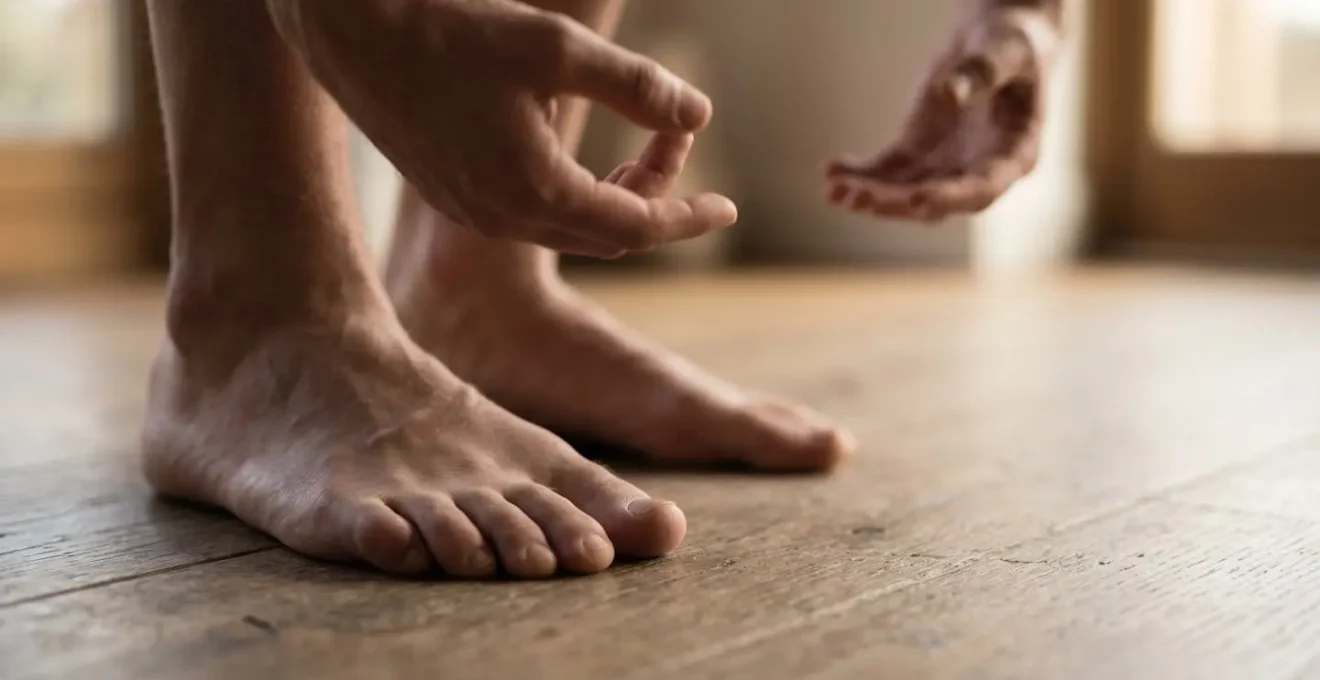
The key is to move beyond generic labels and match the mechanics of the practice to your desired outcome. Don’t choose yoga just because it’s popular; choose it for its specific emphasis on flexibility and breath-movement synchronization if that aligns with your needs. Consider swimming or water aerobics if you require full-body movement with zero impact to protect sensitive joints. This goal-oriented approach transforms your selection process from a random choice into a strategic decision.
Your Framework for Selecting a Goal-Oriented Practice
- For balance and fall prevention: Tai Chi is unparalleled. It focuses on slow, controlled weight transfer and proprioceptive training, enhancing your body’s innate sense of stability.
- For core stability and post-pregnancy recovery: Pilates is the gold standard. It emphasizes precise engagement of the transverse abdominis and pelvic floor muscles.
- For nervous system regulation and stress reduction: Restorative yoga and somatic movement are designed to promote deep relaxation and activate the parasympathetic (rest-and-digest) response.
- For joint mobility without any impact: Swimming and water aerobics offer a unique advantage. The buoyancy of water supports your body, allowing for full-range, non-compressive movement.
- For chronic pain management: Gentle yoga, Tai Chi, and the Feldenkrais Method provide non-threatening movement patterns that can help retrain the brain’s response to pain signals.
How to Embrace Gentle Practice When Part of You Feels Like It Is Not Real Exercise?
This is the biggest psychological hurdle for anyone conditioned by the « no pain, no gain » culture. When your mind screams that you’re not working hard enough, it’s essential to arm yourself with both a new mindset and compelling evidence. The first step is to redefine « results. » Instead of chasing immediate exhaustion and calorie burn, shift your focus to metrics like improved sleep, lower resting heart rate, reduced daily aches, and an increased feeling of energy—all hallmarks of a well-regulated nervous system.
The fitness methodology Evlo Fitness puts it perfectly: « Gentle consistency wins over intense inconsistency for long-term fitness results. » An injury-free person who practices gentle movement four times a week will achieve far greater lifetime fitness than an all-or-nothing enthusiast who goes hard for a month and is then sidelined by injury or burnout for the next two. It’s about accumulating positive inputs over time, not depleting the system in sporadic bursts.
Crucially, the science backs this up, even for traditional fitness goals. Research from the American Council on Exercise found that a reduced intensity workout (REHIT) elicits comparable benefits to traditional, longer moderate-intensity workouts. This shows that the body’s adaptive responses are not solely dependent on brute-force effort. The quality and type of stimulus matter more than sheer volume or intensity. Gentle practices provide a high-quality stimulus to the neuromuscular and fascial systems without the high physiological cost.
To truly embrace it, treat your gentle practice as a skill to be learned, not a task to be endured. Pay attention to the subtle sensations. Notice the quality of your movement. Celebrate the ability to perform an exercise with more control and less strain. This shift from an external, effort-based validation to an internal, awareness-based one is the key to unlocking the deep satisfaction and profound benefits of gentle practice.
How Do You Progress and Challenge Yourself Within Gentle Practices Over Years?
A common misconception is that gentle practices are static and lack a path for progression. If you can’t add more weight, run faster, or do more reps, are you really improving? The answer is a resounding yes, but the metrics of progress are more sophisticated. Progression in gentle practice is about increasing quality, complexity, and awareness, not just quantity.
Instead of lifting heavier, you progress by:
- Increasing control and stability: Holding a yoga pose with less wobble or performing a Pilates move with more precision.
- Expanding range of motion: Moving deeper into a stretch safely or achieving greater spinal rotation.
- Refining proprioceptive acuity: Being able to balance with your eyes closed or feel the subtle weight shifts in your feet with greater clarity.
- Increasing duration and complexity: Linking more movements together in a fluid sequence or sustaining a focused practice for longer periods.
This type of progress has profound implications for healthy aging. For example, a landmark 2024 study published in *Frontiers in Physiology* demonstrates that sensorimotor exercise programs significantly improved proprioceptive acuity, balance, muscle strength, and functional mobility in elderly participants. This is the essence of gentle progression: you are honing your body’s internal feedback systems, which is a far more valuable skill for long-term function than simply being able to lift a heavier dumbbell.
Think of it as developing your « movement vocabulary. » A beginner might learn a few « words » (basic poses or exercises). An advanced practitioner can string them together into complex « sentences » (fluid sequences) and express « poetry » (graceful, effortless, and highly controlled movement). This is a lifelong pursuit that constantly offers new layers of challenge and refinement, ensuring your practice remains engaging and effective for decades.
What Is the Difference Between Gym Strength and Strength You Can Actually Use?
This question gets to the very heart of the paradigm shift. « Gym strength » is often built in isolation. A bicep curl machine strengthens your bicep. A leg press machine strengthens your quads. While this can build impressive-looking muscles, it doesn’t necessarily translate to the complex, multi-joint movements of real life, like lifting a heavy suitcase, playing with a child, or getting up off the floor.
Functional strength, in contrast, is integrated. It’s the ability of your entire body—muscles, nerves, and connective tissues—to work together as a coordinated system. This is the strength that matters. It’s built not by isolating muscles, but by training movement patterns. This is where gentle practices excel, as they teach the body to move as a unified whole.
A critical, often-overlooked component of this system is the fascia, the web of connective tissue that surrounds and interconnects every muscle, bone, and organ. It’s our « structural integrity » network. As NCCIH Director Dr. Helene M. Langevin explains, fascia is a dynamic and responsive tissue:
Fascia is constantly evolving, both dependent on and modulating sustained postures, repetitive movement, quantity of motion, load, stress, strain, hydration, pH, temperature, neurotransmitters, and hormones.
– Dr. Helene M. Langevin, NCCIH Director
Healthy, hydrated, and pliable fascia allows muscles to glide smoothly and forces to be distributed efficiently across the body. Chronic stress, repetitive strain from isolated exercises, or a sedentary lifestyle can cause fascia to become stiff and restricted, leading to pain and dysfunctional movement patterns. Gentle, multi-directional movements found in practices like yoga and Tai Chi are essential for maintaining fascial health, ensuring your strength is fluid, adaptable, and truly usable in the real world.
Which Movements at 50 Predict Whether You Will Need Help Getting Dressed at 80?
The measure of successful aging isn’t the absence of wrinkles, but the preservation of independence. The ability to perform Activities of Daily Living (ADLs)—like dressing, bathing, and moving around your home—is the ultimate expression of functional fitness. Certain fundamental movement patterns, when maintained at 50, are powerful predictors of this independence at 80.
Perhaps the single most important is the ability to get up from the floor without using your hands. This seemingly simple act requires a sophisticated combination of core strength, hip mobility, coordination, and balance. It is a full-body functional test. Losing this ability is a significant red flag for declining mobility and increased dependency. Practices that regularly involve floor work, like yoga and Pilates, are direct training for this essential life skill.

Another surprisingly potent indicator is grip strength. It’s not just about opening jars. Multiple studies demonstrate that grip strength is a robust marker for overall muscle mass, bone density, and even cognitive health, making it a powerful predictor of longevity. While you can train it with grippers, it’s also developed functionally through practices that involve hanging, pulling, and weight-bearing on the hands, like certain styles of yoga.
Other key movements include the ability to touch your toes (spinal and hamstring flexibility), balance on one leg for 30 seconds (proprioception), and comfortably get into a deep squat (hip, knee, and ankle mobility). These aren’t flashy gym exercises; they are the foundational blocks of a body that can navigate the world with ease and confidence, well into old age.
Key Takeaways
- True fitness is defined by long-term functionality and resilience, not short-term intensity and exhaustion.
- Gentle practices excel at improving nervous system regulation, fascial health, and proprioception—the foundations of usable strength and graceful aging.
- Progression in gentle movement is measured by quality, control, and complexity, offering a sustainable path for lifelong improvement.
Why Can Some 70-Year-Olds Move Better Than Some 40-Year-Olds?
The answer lies in a paradigm shift away from chronological age and towards biological age. A 40-year-old with a sedentary desk job, chronic stress, and a weekend-warrior approach to intense exercise may have « older » tissues than a 70-year-old who has cultivated a consistent, mindful movement practice. The difference is not in their birth certificates, but in the health of their connective tissues and the quality of their neuromuscular control.
As fascia expert Jessa Zinn states, our potential for movement is not fixed by age: « Fascia can be remodeled and worked with at any age, and if we keep the tissues healthy and hydrated, we increase the potential for avoiding age-related issues. » The 70-year-old who moves well has likely spent decades investing in the health of this structural network through varied, gentle movement, while the 40-year-old’s tissues may be stiff and dehydrated from lack of movement and chronic inflammation.
Furthermore, the « use it or lose it » principle has a crucial, counter-intuitive caveat. It’s not just about using it, but *how* you use it. Constantly overloading joints with high-impact, high-intensity exercise can accelerate wear and tear. In contrast, counterintuitive research shows that moderate mechanical loading on cartilage over time minimizes the turnover of tissue constituents, resulting in a protective effect rather than degeneration. The 70-year-old’s consistent walking, swimming, or Tai Chi has been actively preserving their joints, while the 40-year-old’s sporadic, high-impact workouts may be unknowingly contributing to their decline.
Ultimately, a younger person’s body can tolerate more abuse, but that tolerance is finite. The 70-year-old who moves with grace and ease is a living testament to the power of a long-term strategy. They have chosen the path of sustainable investment over high-risk, high-cost expenditure. They prove that how we move throughout our lives matters far more than the year we were born.
By shifting your perspective from intensity to quality, you are not taking an easier path; you are choosing a smarter, more sustainable one. The next logical step is to begin integrating these principles into your own routine, focusing on building a body that is not just fit for today, but resilient for all your tomorrows.