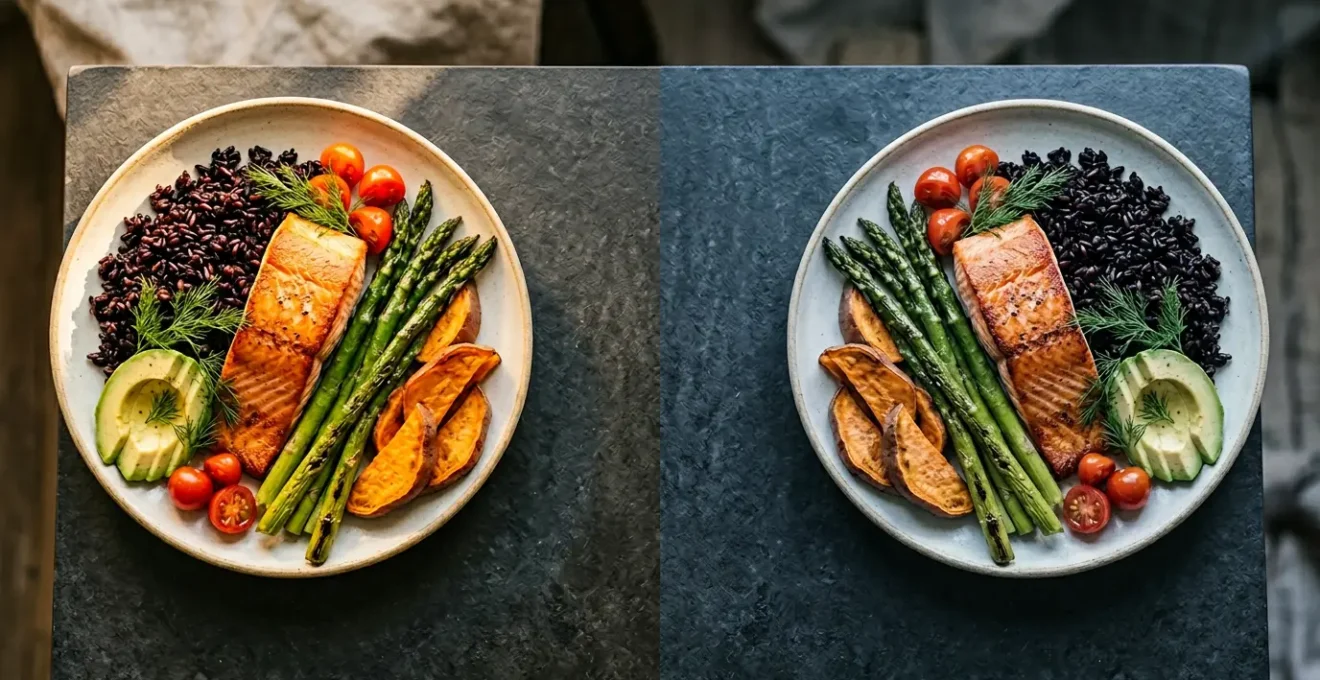
The energy you feel isn’t dictated by calorie counts, but by how well your body can access the nutrients locked inside your food.
- The physical structure of food, its « food matrix, » is more important than its on-paper nutritional value.
- Cooking, food pairings, and your individual biology can dramatically increase or decrease the nutrients you actually absorb.
Recommendation: Stop just counting calories and start focusing on nutrient bioavailability—the true measure of a food’s power.
It’s one of the most frustrating paradoxes in nutrition. You diligently track your calories, ensuring you’re hitting your targets. Your friend does the same, eating a near-identical quantity of food. Yet, they are full of vitality while you feel sluggish, foggy, and perpetually depleted. This isn’t a failure of willpower; it’s a fundamental misunderstanding of how the body derives energy from food. The conversation around health has been dominated by quantity—calories in, calories out—for so long that we’ve forgotten the most critical factor: quality and accessibility.
The common advice is to simply « eat whole foods » or « avoid processed items. » While not wrong, this advice fails to explain the underlying mechanism. It doesn’t answer *why* a whole apple provides a different energy signal to the body than the equivalent calories from apple juice. The secret lies not in the listed nutrients, but in their packaging. The true currency of energy is not the calorie itself, but what your body can successfully extract and utilise from the food you eat. This is the science of nutrient bioavailability.
But if the answer isn’t just about what we eat, but *how* our body accesses it, a new set of questions emerges. Does cooking destroy all the goodness in our food? Are supplements a viable shortcut? This article moves beyond the simplistic world of calorie counting. We will explore the revolutionary concept of the « food matrix » to understand how your food’s structure dictates its energy potential. By understanding how to work with this matrix through smart preparation and powerful food combinations, you can finally unlock the vitality that has been eluding you, even on the same number of calories.
This guide will deconstruct the journey from food on your plate to usable energy in your cells. By understanding these principles, you can transform your relationship with food, moving from a frustrating numbers game to an intuitive and effective strategy for lasting energy.
Summary: Decoding the Real Source of Food Energy
- What Is the Difference Between Eating Enough Calories and Getting Enough Nutrients?
- Which Common UK Supermarket Foods Deliver the Most Nutrition Per Pound Spent?
- Does Cooking Destroy Nutrients or Does It Sometimes Make Them More Absorbable?
- When Does Taking Supplements Replace the Need to Eat Well and When Does It Not?
- Which Food Combinations Help You Absorb More Nutrients From the Same Ingredients?
- Which Nutrients Need Extra Attention on a Plant-Based Diet and How Do You Get Enough?
- Why Your All-Raw Detox Diet Might Be Weakening Your Digestion Further?
- Why Do Some Long-Term Vegans Thrive While Others Develop Deficiencies After 3 Years?
What Is the Difference Between Eating Enough Calories and Getting Enough Nutrients?
The core of the energy paradox lies in a simple but profound distinction. Calories, derived from macronutrients like carbohydrates, proteins, and fats, are relatively easy for the body to absorb. In fact, research on nutrient bioavailability shows that macronutrients typically have an absorption rate of over 90%. They provide raw fuel. Nutrients, however—the vitamins, minerals, and phytonutrients that orchestrate your body’s every function—are a different story. Their absorption can be highly variable, dependent on a factor that calorie-counting completely ignores: the food matrix.
Think of the food matrix as the intricate, three-dimensional structure of a whole food. It’s the fibrous network of a carrot, the cellular walls of a spinach leaf, the complete package that holds all the nutrients together. A calorie is just a unit of energy, but a nutrient is a key that needs to be freed from this matrix to unlock a specific biological door. As a 2025 comprehensive review revealed, even foods with identical chemical compositions can have vastly different effects on the body precisely because their physical matrix dictates how nutrients are delivered and absorbed.
To understand this, consider the difference between eating a whole apple and drinking a glass of apple juice with the same calorie count. The apple’s matrix, rich in fibre, slows down sugar release and ensures its vitamins are protected and delivered steadily. The juice, with its matrix obliterated, delivers a rapid sugar spike and far fewer intact micronutrients. The calories are the same, but the biological instruction is completely different.

This is why two people can eat the same calories and have wildly different outcomes. One person might be consuming « empty » calories from highly processed foods where the matrix is destroyed, leading to poor nutrient uptake and low energy. The other might be eating fewer calories but from whole foods with an intact matrix, providing a steady stream of the vitamins and minerals their body needs to thrive. The question is not just « how many calories? » but « how much work does my body have to do, and what can it actually access? »
Which Common UK Supermarket Foods Deliver the Most Nutrition Per Pound Spent?
Embracing nutrient density doesn’t require a trip to a specialty health food store or a massive budget. Some of the most nutritionally powerful foods are hiding in plain sight in your local UK supermarket, offering exceptional value for both your health and your wallet. The key is to look for foods that have a robust, natural food matrix and a high concentration of essential micronutrients.
Here are some of the top performers you can find on your next shopping trip:
Tinned sardines and mackerel are nutritional powerhouses. For around £1 per tin, they provide a fantastic source of anti-inflammatory omega-3 fatty acids, protein, and vitamin D. Crucially, because you consume the small, soft bones, they are also an excellent source of highly bioavailable calcium. Another star of the frozen aisle is frozen spinach. It provides iron, folate, and vitamin K at a fraction of the cost of fresh, often delivering more nutrition as it is flash-frozen at peak ripeness, locking in nutrients that are lost during the transport of « fresh » produce.
Don’t overlook the humble dried lentils and mixed beans. They are an incredibly cost-effective source of plant-based protein, dietary fibre, and prebiotic compounds that are essential for nourishing a healthy gut microbiome. Similarly, tinned tomatoes offer a unique advantage: the heating process used in canning actually breaks down the plant’s cell walls, making the powerful antioxidant lycopene more bioavailable than in raw tomatoes. Lastly, for non-vegetarians, beef liver is unparalleled. It is one of the most nutrient-dense foods on the planet and among the most affordable organ meats, packed with vitamin A, iron, and a spectrum of B vitamins, especially B12.
The value of frozen produce, in particular, is often underestimated. As experts from the British Heart Foundation confirm, it’s not a compromise on quality.
Frozen vegetables offer the same nutrition as fresh. They’re harvested at peak ripeness and flash-frozen to seal in nutrients.
– Registered dietitians at British Heart Foundation, Healthy food shopping list on a budget guidance
By focusing on these budget-friendly staples, you shift your mindset from expensive « superfoods » to the quiet, consistent nutritional champions available in every supermarket. This strategy makes high-quality nutrition accessible to everyone, proving that eating well is about smart choices, not high spending.
Does Cooking Destroy Nutrients or Does It Sometimes Make Them More Absorbable?
A common fear among the health-conscious is that cooking « kills » the nutrients in food, leading many to believe that a raw diet is inherently superior. While it’s true that some delicate, water-soluble vitamins like vitamin C and certain B vitamins can be diminished by heat, this is only half the story. In many cases, cooking is not a destroyer of nutrition but a key that unlocks it, a process of controlled deconstruction of the food matrix to enhance nutrient bioavailability.
For many vegetables, nutrients are tightly bound within tough, fibrous cell walls that our digestive system cannot easily break down. Cooking, through heat and moisture, acts as a form of pre-digestion. It softens these structures, releasing the valuable micronutrients trapped inside. The classic example is lycopene in tomatoes, a potent antioxidant whose absorption is significantly increased when tomatoes are cooked, especially with a source of fat like olive oil. Similarly, the beta-carotene in carrots and the iron in spinach become more accessible to the body after being cooked.
This principle of enhancing bioavailability through preparation is a cornerstone of nutritional science.
Case Study: Cooking Methods and the Food Matrix
A Tufts University study on fortified blended foods highlighted how critical formulation and preparation are. The research showed that the chosen cooking methods had a significant impact on the food’s physical structure and, consequently, its nutrient bioavailability. By altering the food matrix, cooking made the embedded nutrients more accessible for the body to absorb, demonstrating that the way food is prepared is as important as its ingredients in determining its ultimate nutritional value.
The goal is not to avoid cooking, but to cook intelligently. Methods like steaming, light sautéing, or roasting preserve more nutrients than boiling, where vitamins can leach into the water. The key takeaway is to view cooking as a tool. It’s a strategic decision to either preserve the delicate nutrients in raw foods or to intentionally break down the food matrix of tougher foods to liberate the powerful compounds within. A balanced diet wisely incorporates both raw and thoughtfully cooked foods to maximise the nutritional potential of each.
When Does Taking Supplements Replace the Need to Eat Well and When Does It Not?
In our quest for optimal health, it’s tempting to view supplements as a nutritional insurance policy—a simple way to fill any gaps left by our diet. While they can be powerful tools for targeted repletion, they can never truly replace the complex symphony of a whole-food diet. The reason, once again, comes back to the food matrix. A supplement provides an isolated nutrient, but a whole food provides that nutrient in a package complete with fibre, enzymes, co-factors, and thousands of other phytonutrients that work in synergy.
An orange, for example, is not just vitamin C. It’s vitamin C wrapped in a matrix of fibre that slows its absorption, and accompanied by flavonoids and other compounds that enhance its function within the body. You cannot replicate this intricate biological package in a pill. Supplements lack the structural and synergistic benefits of the food matrix, which is designed for optimal absorption and utilisation. They are a single instrument playing a solo, whereas whole food is an entire orchestra.

This is not to say supplements have no place. They are essential in specific, defined circumstances. These include correcting a diagnosed deficiency (like iron or vitamin D), addressing increased needs during life stages like pregnancy, or obtaining nutrients that are difficult to get from a specific diet (like vitamin B12 for vegans). In these cases, a supplement is a targeted intervention, not a dietary foundation. Even here, quality and form matter immensely. For instance, the vitamin D form calcifediol is far more bioavailable than the more common cholecalciferol, just as methylfolate is superior to synthetic folic acid for many individuals.
The danger lies in using supplements as a crutch for a poor diet. Taking a multivitamin does not cancel out the negative effects of a diet high in processed foods with a destroyed food matrix. True, lasting energy and health are built on a foundation of nutrient-dense whole foods. Supplements should be seen for what they are: a strategic, and often temporary, *supplement* to an already excellent diet, not a replacement for it.
Which Food Combinations Help You Absorb More Nutrients From the Same Ingredients?
Once you understand that nutrition is about absorption, not just consumption, the next logical step is to explore « nutrient synergy. » This is the principle that certain foods, when eaten together, enhance each other’s nutritional value, allowing your body to absorb significantly more goodness from the same ingredients. A meal’s total benefit can be far greater than the sum of its individual parts. It’s one of the most powerful and practical ways to maximise your nutritional intake without eating more food.
Some of these pairings are well-known, but others are less obvious yet incredibly potent. For instance, the fat-soluble vitamins A, D, E, and K, found in foods like leafy greens and carrots, require dietary fat for absorption. Adding a drizzle of olive oil to your salad or roasting carrots with a little coconut oil isn’t just for flavour; it’s a non-negotiable step to unlock those vitamins. Similarly, the body struggles to absorb non-heme iron from plant sources like lentils and spinach on its own. Pairing these foods with a source of vitamin C—like a squeeze of lemon juice or some bell peppers—can dramatically increase iron uptake in the gut.
These synergistic effects are a testament to the intricate design of whole-food nutrition, where compounds work together to enhance bioavailability. As recent research on micronutrient interactions confirms, this is not a simple one-to-one relationship; a web of nutrients often works together to support metabolic processes like iron absorption. Mastering a few key combinations can transform the nutritional impact of your everyday meals.
Your action plan: Powerful Nutrient Synergy Combinations
- Turmeric + Black Pepper: Piperine in black pepper has been shown to increase the absorption of curcumin, turmeric’s anti-inflammatory compound, by up to 2000%.
- Leafy Greens + Olive Oil: The healthy fats in olive oil are essential for absorbing the fat-soluble vitamins (A, K) and polyphenols present in vegetables like kale and spinach.
- Tomatoes + Healthy Fats: Lycopene, the antioxidant in tomatoes, is fat-soluble. Its absorption increases significantly when consumed with fats like avocado or oil-based dressings.
- Iron-rich Foods + Vitamin C: Vitamin C (from citrus, bell peppers, broccoli) dramatically enhances the body’s ability to absorb non-heme iron from plant sources like beans, lentils, and tofu.
- Green Tea + Lemon: The catechins in green tea are powerful antioxidants, but can be unstable in the digestive tract. The citrus from lemon helps to stabilize them, increasing absorption.
By thinking in terms of combinations rather than isolated ingredients, you start to cook and eat like a true nutrient strategist. This approach shifts the focus from what’s on the label to what actually makes it into your system, turning every meal into an opportunity to maximise your vitality.
Which Nutrients Need Extra Attention on a Plant-Based Diet and How Do You Get Enough?
A well-planned plant-based diet can be incredibly healthy, but it presents a unique case study in the importance of nutrient bioavailability and the food matrix. Plant foods are structured differently from animal foods, and this has significant implications for how we absorb certain key nutrients. Simply eating a wide variety of plants is not always enough; a strategic approach is required to ensure you’re getting what your body truly needs.
Several nutrients are notorious for being less bioavailable from plant sources. Iron is a classic example. Plants contain non-heme iron, which is significantly less absorbable than the heme iron found in animal products. This is partly due to the presence of « anti-nutrients » like phytates in grains and legumes, which can bind to minerals and inhibit their absorption. Similarly, while many plant foods contain calcium, its bioavailability can be lower than that from dairy. For example, a 2024 study comparing calcium sources found that none of the tested plant-based milks delivered as much bioaccessible calcium as cow’s milk, where unique proteins help ferry the mineral into the body.
Other critical nutrients to monitor include Vitamin B12, which is virtually non-existent in plant foods and requires reliable supplementation; long-chain omega-3 fatty acids (EPA and DHA), which the body can convert from plant-based ALA (found in flax and chia seeds) but often inefficiently; and zinc, another mineral whose absorption can be hindered by phytates.
This challenge is perfectly articulated by researchers in the field of micronutrient absorption.
Plant-based foods exhibit reduced micronutrient bioavailability, due to entrapment in cellular structures and binding by antagonists such as phytate and fiber.
– Researchers in micronutrient bioavailability, Micronutrient bioavailability: concepts, influencing factors, and strategies for improvement
The solution is not to abandon a plant-based diet, but to work smarter. This means diligently using the principles of nutrient synergy (pairing iron with vitamin C), employing preparation methods that reduce phytates (soaking and sprouting grains and legumes), and using targeted, high-quality supplements (especially for vitamin B12) to fill the inevitable gaps. A successful plant-based diet is a masterclass in understanding and respecting the food matrix.
Why Your All-Raw Detox Diet Might Be Weakening Your Digestion Further?
In the wellness world, « raw » is often equated with « pure » and « healthy. » The logic seems sound: raw foods contain live enzymes and haven’t had their nutrients degraded by heat. While this is partially true, an exclusively raw diet, especially in the context of a « detox, » can be a double-edged sword. For many people, particularly those with compromised or sensitive digestive systems, it can create more stress than it relieves by imposing a heavy digestive load.
The robust food matrix of raw vegetables, with its tough cellulose fibres, demands a significant amount of work from your digestive system to break down. If your digestion is already weak, bombarding it with a high volume of raw, fibrous food can lead to bloating, gas, and discomfort. Instead of feeling cleansed and energised, you may end up feeling drained as your body expends precious energy trying to extract nutrients from these tough structures. The very matrix that protects the nutrients now acts as a barrier that your body struggles to overcome.

This is where the gentle power of cooking comes in. Lightly steaming or cooking vegetables helps to break down these tough cell walls, effectively « pre-digesting » the food for you. This reduces the digestive load and makes the nutrients inside far more accessible. While you might lose a small amount of water-soluble vitamins, you gain access to a much wider array of minerals and other compounds that would have otherwise passed through you undigested.
Case Study: Cooking to Enhance Digestibility
Research on food digestibility clearly demonstrates this principle. While raw carrots and spinach are great sources of dietary fibre, studies show that cooking them allows the human body to access and absorb significantly more of their nutrients. The heat breaks down the tough cellular matrix that the digestive system can’t fully penetrate on its own. This makes cooked vegetables a more efficient source of certain nutrients, especially for individuals whose digestive capacity is not at its peak.
A true detox or digestive reset should support and soothe the gut, not overwhelm it. For many, this means prioritising warm, well-cooked, and easily digestible foods like soups, stews, and steamed vegetables over a harsh, all-raw regimen. It’s about working *with* your body’s current capacity, not against it.
Key takeaways
- The energy you get from food is determined by nutrient bioavailability, not just the calorie count.
- The physical structure of food (the « food matrix ») dictates how well your body can access the nutrients within.
- Smart cooking and food pairings can dramatically increase the nutritional value you absorb from the same ingredients.
Why Do Some Long-Term Vegans Thrive While Others Develop Deficiencies After 3 Years?
The final piece of the energy puzzle is the most personal one: bio-individuality. This explains why two people can follow the exact same diet—even a perfectly planned, nutrient-dense vegan diet—and experience completely different results. One person thrives for years, full of energy and vitality. The other, after an initial period of feeling great, starts to develop nagging deficiencies, fatigue, and health issues around the three-year mark. The diet is the same, but the people are not.
One of the biggest factors is our unique genetic makeup. As research on bio-individuality demonstrates, our genes can significantly impact how we absorb and metabolise nutrients. For example, some people have genetic variations that make them highly efficient at converting plant-based ALA into the crucial omega-3s EPA and DHA, while others are very poor converters and will almost certainly need to supplement. Similarly, variations in genes related to B vitamin metabolism can determine who is more susceptible to a B12 deficiency.
Another critical variable is the health of our gut microbiome. A diverse and robust population of gut bacteria is essential for synthesising certain vitamins (like vitamin K and some B vitamins) and unlocking nutrients from the plant food matrix. A person with a healthy gut can extract more value from their food. Conversely, someone with underlying dysbiosis or bacterial overgrowth may have their ability to absorb vitamins and minerals compromised, leading to deficiencies over time despite a good diet.
Age, stress levels, and overall physiological state also play a huge role. What works for a healthy 25-year-old may not work for a 45-year-old under chronic stress. The idea of a single « perfect diet » for everyone is a myth. The reason some long-term vegans thrive while others falter is that the successful ones have, either by luck or by careful strategy, found an approach that aligns with their unique biology. They supplement where their genes are weak, they nurture their gut health, and they adapt their diet to their changing life circumstances. They don’t just follow the rules; they listen to their body’s feedback and honour their own bio-individuality.
Moving from a focus on calorie quantity to nutrient quality is the single most powerful shift you can make for your energy and long-term health. By applying these principles, you can begin to work with your body, providing it with the accessible, synergistic nutrition it needs to truly thrive. Start today by choosing one meal and transforming it with the power of nutrient synergy.