
The biggest mistake in yoga injury recovery is returning to your mat when your muscle *feels* ready, not when it’s *biologically healed*—a gap that causes most re-injuries.
- Complete rest can delay recovery; controlled, early movement (optimal loading) is key for better tissue repair.
- Your perceived « tightness » may be nerve tension, not muscle tightness. Stretching it can make things worse.
Recommendation: Follow a phase-based return protocol, starting with a physiotherapy diagnosis and progressing through mindful modifications that respect your body’s true healing timeline.
The moment you feel that sharp twinge in your hamstring, a dedicated yogi’s mind splits into two conflicting streams of thought. One is the immediate, fearful impulse to stop everything, vowing to rest for weeks. The other is the impatient voice already calculating how soon you can get back to your vinyasa flow. This anxiety is normal. Common advice like « listen to your body » or « just take it slow » feels hollow and unhelpful when you don’t know which signals to trust. Is that a healing stretch or a warning sign of re-injury?
Many practitioners fall into one of two traps: either they rest for too long, allowing muscles to weaken and compensatory patterns to set in, or they rush back prematurely, guided by a false sense of functional recovery. They might stretch the hamstring aggressively, unaware that what they feel as « tightness » could be nerve irritation that only worsens with pulling. They believe they are healed because they can walk without pain, only to suffer a setback in their first deep forward fold.
But what if the key to a safe and sustainable return isn’t just about rest or caution? What if it’s about understanding the critical, often-ignored difference between when your muscle feels strong and when it is truly, biologically healed? This guide offers a new perspective, moving beyond generic advice to provide a staged, therapist-guided framework for your recovery. We will deconstruct common myths, provide concrete timelines, and give you the tools to distinguish between different types of tension so you can make informed, confident decisions on your path back to the mat.
This article provides a structured roadmap for your recovery journey. You will learn the principles of modern injury science and how to apply them practically, from initial diagnosis to your full, confident return to practice.
Summary: Your Phased Guide to Recovering from a Hamstring Strain
- Why Resting Completely for 4 Weeks May Delay Your Injury Recovery?
- How to Adapt Your Yoga Practice When You Cannot Weight-Bear on One Wrist?
- Yoga Modification or Physio: Which Should Come First After a Back Injury?
- The Return-to-Practice Error That Causes 60% of Yoga Injuries to Recur
- How Long Should Each Phase of Your Post-Injury Yoga Return Take?
- How Often Should You Book Massage Therapy When Recovering from a Running Injury?
- How Can You Tell if Your Tightness Is Muscle, Fascia or Nerve Tension?
- How to Choose Between Sports Massage and Deep Tissue When You Have Chronic Back Pain?
Why Resting Completely for 4 Weeks May Delay Your Injury Recovery?
The long-held belief that complete and prolonged rest is the best medicine for a muscle strain is being replaced by a more nuanced and effective concept: optimal loading. While a short period of rest immediately after injury is necessary to manage inflammation, extended immobilization can be counterproductive. It can lead to muscle atrophy, loss of strength, and a decreased ability of the healing tissue to withstand future stress. Your body needs gentle signals to know how to rebuild the tissue correctly.
Think of healing muscle fibers like concrete being laid. If left completely undisturbed, it sets, but it may not be strong. If you apply gentle, specific, and progressive stress at the right times, you encourage the new tissue fibers to align in a stronger, more functional way. This principle is known as mechanotherapy—using movement as medicine. Research in physical therapy consistently shows that early, controlled mobilization promotes better outcomes.
As one physical therapy review on the topic explains, this approach leads to a better range of motion, faster functional recovery, and ultimately, a shorter overall recovery time compared to delayed movement. The key is that the movement must be safe, tolerable, and perfectly matched to the tissue’s current healing phase. This is why a blanket prescription of « four weeks of complete rest » can be a mistake; it misses the crucial window to guide the healing process actively and intelligently, setting the stage for a stronger, more resilient recovery.
How to Adapt Your Yoga Practice When You Cannot Weight-Bear on One Wrist?
While our main focus is on a hamstring injury, the principle of intelligent adaptation applies to any injury that limits your yoga practice. A common issue like wrist pain, for example, can feel like it eliminates half the poses in a typical vinyasa class. However, with the right modifications, you can maintain your practice’s integrity, continue to build strength, and allow your wrist to heal without load.
The goal is to find creative ways to transfer weight away from the hands and wrists. This often involves using the forearms, which provides a larger, more stable base of support and keeps the wrist joint in a neutral, unloaded position. This not only protects the injured area but can also help you discover new ways to engage your core and upper body. Learning these modifications is an essential skill for any long-term yoga practitioner, as it builds resilience and adaptability in your practice.
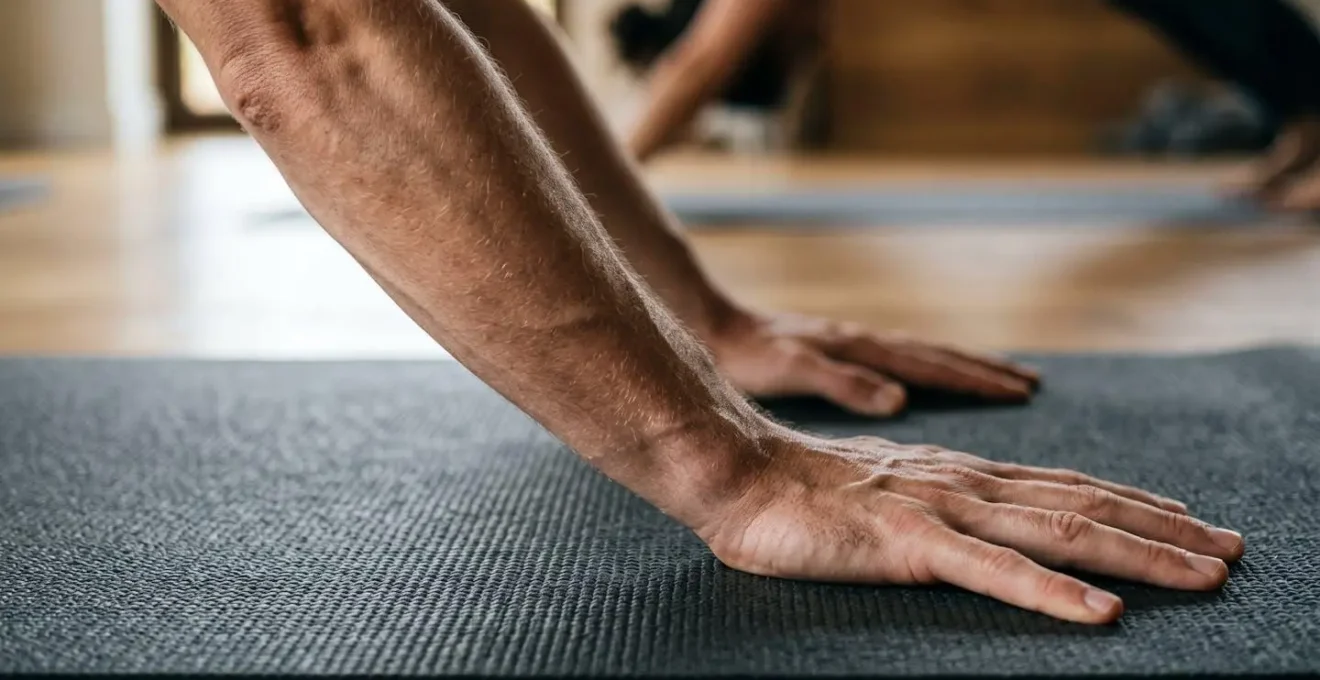
The image above highlights how the forearms can become a powerful base of support. Below are five essential modifications to keep you flowing safely when a wrist needs a break:
- Replace Plank with Forearm Plank: This is the most direct substitution, distributing your body weight across the forearms instead of concentrating it on the wrists.
- Substitute Downward Dog with Dolphin Pose: Dolphin pose maintains the hamstring stretch and upper body work of Downward Dog but from the forearms, completely removing wrist load.
- Practice Upside-Down Crow on your back: This clever variation delivers the same core, hip flexor, and hamstring benefits as the traditional arm balance without any weight on your hands.
- Use yoga blocks under your forearms in tabletop: For poses originating from hands and knees, placing blocks under the forearms elevates your contact points and eliminates wrist extension.
- Practice weight-bearing poses on your fists: In some cases, making a fist and placing the knuckles on the mat can keep the wrist in a neutral line, reducing strain from extreme extension. This should be done with caution and awareness.
Yoga Modification or Physio: Which Should Come First After a Back Injury?
When you experience an injury, especially something as complex as back pain, the path forward can be confusing. Should you see a yoga therapist for modifications or a physiotherapist for a diagnosis? The answer is unequivocal: physiotherapy must come first. A physiotherapist is a trained diagnostician who can identify the specific source of your pain. Is it a disc issue, a muscular strain, a joint problem, or something else? Without an accurate diagnosis, any attempt at movement, including modified yoga, is guesswork and can be dangerous.
Once a physiotherapist has provided a clear diagnosis and, crucially, given you clearance for gentle movement, a knowledgeable yoga teacher or yoga therapist becomes an invaluable partner. They can translate the physio’s clinical advice (e.g., « strengthen the transverse abdominis and gluteus medius ») into tangible yoga cues and poses (e.g., « in Bridge Pose, imagine you are squeezing a block between your knees and actively press the floor away »). As the Journal of Athletic Training Editorial Board notes, all treatment decisions must be based on expert opinions and careful consideration of risks and benefits.
The roles of physiotherapy and modified yoga are not competitive; they are complementary and sequential. The following table clarifies their unique and collaborative functions in your recovery.
A comparative analysis of these disciplines highlights how they work together for a holistic recovery. Physiotherapy provides the « what » and « why » of the injury, while modified yoga provides a holistic context for retraining movement patterns mindfully.
| Aspect | Physiotherapy Role | Modified Yoga Role |
|---|---|---|
| Primary Function | Diagnostic assessment and targeted treatment | Holistic movement practice and pattern correction |
| When to Use | Immediately after injury for diagnosis; ongoing for severe/complex cases | After initial healing phase (typically 48-72 hours) with physio clearance |
| Unique Strengths | Identifies specific tissue damage (disc, muscle, SI joint); prescribes load progression | Addresses whole-body compensatory patterns; builds mindful body awareness |
| Red Flags Requiring Physio | Radiating nerve pain below knee, numbness/tingling, loss of bowel/bladder control | Simple muscular strain without neurological symptoms |
| Collaboration | Provides exercises (e.g., ‘strengthen transverse abdominis and gluteus medius’) | Translates into yoga cues (Bridge with block between knees, modified side planks) |
The Return-to-Practice Error That Causes 60% of Yoga Injuries to Recur
The single most common error that leads to the recurrence of a hamstring strain is returning to practice based on functional recovery instead of biological healing. Functional recovery is when you feel « better »—you can walk without a limp, the daily ache has subsided, and you feel ready to move. Biological healing, however, is the much slower, microscopic process of your body rebuilding the damaged muscle tissue. There is a dangerous gap between these two milestones.
A critical 2021 review in sports medicine found that while athletes often feel functionally ready to return to sport within 11-25 days, the underlying muscle tissue is still immature and weak. In fact, 25% of hamstring re-injuries occur in the very first week after returning to play, often at the exact same location. This happens because the newly formed scar tissue simply isn’t strong enough yet to handle the dynamic loads of poses like deep forward folds or strong vinyasa transitions. Your mind and functional ability are writing checks that your biology can’t yet cash.
This re-injury risk is often compounded by an underlying issue in the kinetic chain. A hamstring strain is frequently not a problem with the hamstring itself, but a symptom of weak or underactive gluteal muscles. The glutes are the primary hip extensors, and when they don’t do their job, the hamstrings are forced to overwork and take on a load they weren’t designed for, leading to strain and injury.
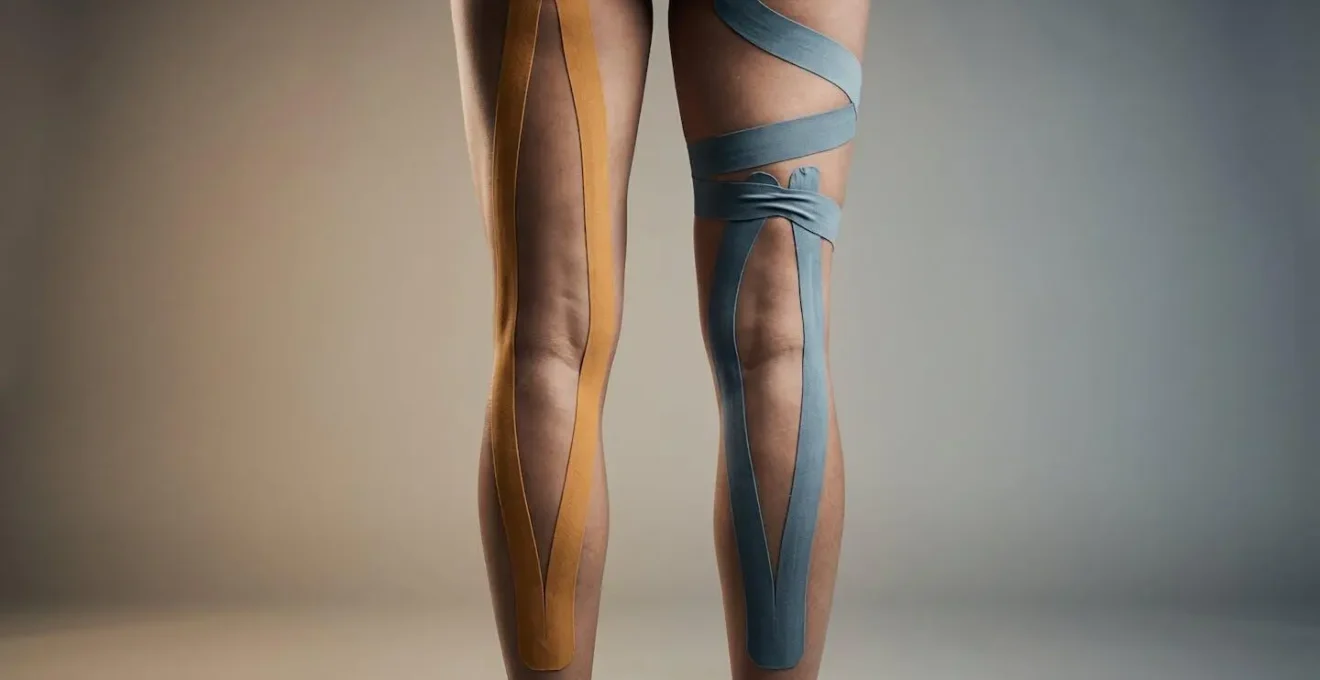
A safe return to yoga, therefore, isn’t just about resting the hamstring; it’s about re-training the entire posterior chain to work correctly. This involves consciously activating the glutes in poses like Bridge, Locust, and modified Warrior III, ensuring they are firing properly before asking the hamstrings to lengthen and work under load. Ignoring this step is like fixing a flat tire without finding the nail in the road—the problem is bound to happen again.
How Long Should Each Phase of Your Post-Injury Yoga Return Take?
Moving away from the vague advice to « go slow, » a structured, phase-based approach provides a much safer and more effective roadmap for your return to yoga. While every injury is unique and timelines must be adjusted based on severity and individual healing, the biological process of muscle repair follows a predictable pattern. A truly safe return to practice is not measured in days, but in the successful completion of these physiological phases, always guided by a « no pain » principle.
Based on scientific studies on biological muscle healing, experts recommend a minimum of 4 weeks for biological muscle healing before considering a return to more demanding activities. This period allows the new, fragile scar tissue to mature. Your return should be mapped across these phases:
- Phase 1: The Acute/Inflammatory Phase (First 2-5 days): This is the only time for near-complete rest. The focus is on protecting the area, managing swelling, and avoiding any movement that causes pain. Gentle, pain-free activation of surrounding muscles (like glute squeezes or quad sets) can begin.
- Phase 2: The Repair/Proliferation Phase (Day 5 to Week 3-4): The body is now laying down new tissue. This is the time for optimal loading. You can begin introducing very gentle, pain-free range of motion exercises. In yoga, this might mean practicing supported Bridge Pose or gentle Cat-Cow, focusing on mindful engagement far from the point of pain. Isometrics (contracting the muscle without moving it) are key here.
- Phase 3: The Remodeling Phase (Week 4 to Week 12+): This is the longest and most critical phase. The body is remodeling the new scar tissue to make it stronger and more like the original muscle. You can now gradually increase the load and complexity of movements. This means slowly reintroducing gentle hamstring stretches (if appropriate), progressing from supported to unsupported poses, and focusing on strengthening the entire kinetic chain, especially the glutes. This is the phase where you bridge the gap between functional recovery and biological healing, but it requires patience. Rushing this phase is the primary cause of re-injury.
The transition between phases should be guided by milestones, not the calendar. You can move to the next phase only when you can complete the exercises of the current phase completely pain-free, with good form and control. This patient, staged approach is your best insurance against setbacks.
How Often Should You Book Massage Therapy When Recovering from a Running Injury?
While often sought for relaxation, massage therapy can be a powerful tool in an athlete’s recovery toolkit, including for runners and yogis nursing an injury like a hamstring strain. Its primary benefits are not in « breaking up scar tissue » aggressively, but in managing compensatory tightness, improving circulation, and down-regulating the nervous system to promote a better healing environment. However, the timing and frequency are critical. More is not always better.
Research on the effects of massage is promising. For instance, a 2020 review of studies found that massage has a small but significant effect on reducing delayed onset muscle soreness (DOMS) and improving perceived fatigue. For an injury, its real value lies in addressing the muscles that are overworking to compensate for the injured one. For a hamstring injury, this often means the lower back, opposite-side glute, and calves become tight and sore. A skilled therapist can work on these areas to restore balance.
Instead of booking sessions randomly, it’s best to align them with your recovery phases. A structured approach ensures you get the right treatment at the right time, supporting your body’s natural healing process without interfering with it.
Your Phase-Based Massage Therapy Protocol for Injury Recovery
- Acute Phase (first 72 hours): Schedule 0 professional massage sessions. The focus here is on protection and managing inflammation (PEACE protocol). Direct massage on the injury site is contraindicated.
- Sub-acute/Repair Phase (days 3-21): Aim for 1 professional session per week. The therapist should focus on compensatory tightness in surrounding muscles (e.g., glutes, calves for a hamstring injury) and use gentle techniques to improve circulation around the injury site without direct, aggressive pressure on it.
- Remodeling/Strengthening Phase (weeks 3-8): Reduce to 1 session every 2-4 weeks. The best time to schedule this is 24-48 hours after your most challenging yoga or rehab session of the week. This helps manage the increased training load and allows the therapist to assess tissue quality and address any new tightness.
- Maintenance Phase (post-recovery): A monthly session, or as needed, is sufficient. This helps address any residual issues and serves as a preventative tool, allowing a therapist to spot and release developing tightness before it becomes a problem.
- Daily Self-Massage (all phases post-acute): Incorporate daily self-massage using a foam roller or massage ball. This is for general maintenance and managing soreness, and it does not replace the assessment and targeted work of a professional therapist.
How Can You Tell if Your Tightness Is Muscle, Fascia or Nerve Tension?
One of the most critical and empowering pieces of knowledge for anyone recovering from a hamstring injury is learning to differentiate between the types of « tightness » they feel. Not all tension is the same. The sensation you feel could be true muscle tightness, a fascial restriction, or—most importantly—neural tension. Treating them all with the same tool (i.e., static stretching) is ineffective at best and harmful at worst. Aggressively stretching a sensitized nerve is a fast track to increased pain and a major setback in your recovery.
After a hamstring injury, the nearby sciatic nerve can become irritated and sensitized by the local inflammation. When you then try to stretch the hamstring, you are also pulling on this sensitized nerve, which responds with sharp, burning, or electrical sensations. This is the body’s protective warning signal. If you ignore it and push deeper, you are essentially « stretching a nerve, » which only increases its irritation. Differentiating these sensations is a non-negotiable skill for a safe return to practice.
A helpful resource is a differential diagnosis chart from a major hospital’s rehabilitation protocol, which helps patients understand these differences. The table below summarizes the key characteristics to help you become a better detective of your own body’s signals.
| Characteristic | Muscle Tightness | Fascial Restriction | Neural Tension |
|---|---|---|---|
| Sensation Quality | Dull ache or broad stretching sensation | Feeling of being ‘bound’, ‘stuck’, or a specific line of tension | Sharp, burning, electric, tingling, or zinging sensation down a specific pathway |
| Self-Assessment Test | Static stretch reproduces a consistent pulling sensation | Rolling/pressing the tissue reveals adhesions or ‘stuck’ areas | Slump Test: Symptoms change with remote movements like lifting your head or flexing your foot during the stretch |
| Treatment Approach | STRETCH: Hold static stretches for 30+ seconds for tissue lengthening | RELEASE: Use slow dynamic movements, myofascial release with a ball, or skin rolling | GLIDE: Never hold an intense stretch. Perform gentle, rhythmic ‘nerve glides’ or ‘flossing’ to mobilize the nerve |
| Post-Hamstring Injury Context | True muscle stiffness from healing scar tissue | Adhesions forming between muscle layers due to inflammation | A sensitized sciatic nerve from nearby inflammation; aggressive stretching makes it worse |
| Response to Treatment | Improves with consistent static stretching over days/weeks | Improves with tissue mobilization and hydration | Worsens with aggressive stretching; improves with specific nerve mobility work |
Key Takeaways
- The feeling of being « ready » to return to practice often precedes true biological healing, creating a high-risk window for re-injury.
- A safe recovery prioritizes « optimal loading » (controlled, progressive movement) over complete rest, and addresses the entire kinetic chain, not just the injured muscle.
- Differentiating between muscle tightness and nerve tension is critical; stretching an irritated nerve will worsen your symptoms and delay recovery.
How to Choose Between Sports Massage and Deep Tissue When You Have Chronic Back Pain?
Just as with injury recovery, navigating the world of therapeutic massage for chronic issues like back pain can be confusing. The menu of services often lists « Sports Massage » and « Deep Tissue » as distinct options, but for the client, the difference is often unclear. While they use different approaches, the most important factor is not the name of the modality, but the skill and diagnostic ability of the therapist.
Deep Tissue massage is generally focused on unwinding long-held postural patterns. Its intent is to release chronic adhesions in the deeper layers of muscle and fascia that contribute to a constant, nagging pain. The pace is often slow, with focused, sustained pressure. Sports Massage, on the other hand, is typically more performance-oriented. Its intent is to prepare an athlete for an event or help them recover afterward. It might involve more dynamic techniques like flushing strokes, compression, and active release to improve tissue quality for a specific activity.
For chronic back pain, the choice depends on the nature of your pain. Is it a constant ache from years of sitting at a desk (suggesting Deep Tissue might be a good fit)? Or does it flare up after a specific activity like running or a new gym routine (suggesting a Sports Massage approach could be beneficial)? The table below, drawing on consensus from therapeutic reviews, outlines the differences.
| Aspect | Sports Massage | Deep Tissue Massage | Alternative: Myofascial Release |
|---|---|---|---|
| Primary Intent | Improve performance and accelerate recovery from a specific activity | Unwind long-held postural patterns and chronic tension | Release fascial restrictions and structural imbalances |
| Techniques Used | Flushing, compression, active release, stretching | Slow, focused pressure to release adhesions in deeper muscle/fascia layers | Sustained pressure on the fascial web, structural integration |
| Best For (Back Pain Context) | Pain exacerbated by activity (e.g., worse after running) – functional overload | Constant, postural pain present for years – underlying structural pattern | Pain that feels ‘stuck’ or ‘un-stretchable’ – a fascial web issue |
| Treatment Depth | Moderate – targets muscle bellies and tendons related to the activity | Deep – works through multiple muscle layers to address chronic holding | Variable – works on connective tissue planes between structures |
Ultimately, a truly skilled practitioner will blend techniques from multiple modalities to suit your specific needs on any given day. As a leading review on therapeutic interventions suggests, the most important choice is finding a therapist who performs a thorough intake assessment and customizes the session to you. As this consensus from integrative manual therapy research puts it:
A truly skilled therapist will blend techniques from all modalities. The most important choice is not the service on a menu, but finding a practitioner who performs a thorough intake assessment, listens to your history and goals, and customizes the session to your specific presentation on that day.
– Consensus from integrative manual therapy research, Muscle Recovery and Therapeutic Intervention Review
By embracing a patient, intelligent, and phase-based approach, you transform your injury from a frustrating setback into an opportunity to build a deeper understanding of your body. This knowledge will not only guide you back to your yoga mat safely but will also make you a more resilient and mindful practitioner for years to come. To put these principles into practice, the next logical step is to work with a qualified professional who can help you create a personalized recovery plan.