
Your daily cuppa is far more than a comforting habit; it’s a science-backed wellness practice hiding in plain sight.
- The effects of herbal teas are not just folklore; specific compounds like apigenin in chamomile and L-theanine in tea leaves have measurable impacts on stress, sleep, and focus.
- How you prepare and drink your tea—from choosing loose-leaf over plastic teabags to the time of day—dramatically alters its health benefits and potential risks.
Recommendation: Start viewing your tea break not as a pause *from* your day, but as an active and powerful tool *for* your well-being strategy.
For many in the UK, the day is punctuated by the simple, comforting ritual of making a cup of tea. It’s the pause that gets us going in the morning, the familiar comfort during a hectic afternoon, the gentle wind-down in the evening. We often hear that chamomile helps with sleep or that peppermint aids digestion, but these ideas often float in the realm of folk wisdom, easily dismissed as pleasant but not potent.
The supermarket shelves are lined with boxes promising calm, energy, and detoxification, which can feel overwhelming. We might grab a box of fruit tea for the flavour or a standard teabag for convenience, without considering the deeper potential held within these dried leaves and flowers. This approach overlooks a profound truth that both ancient traditions and modern science are beginning to confirm.
But what if the real power of your afternoon tea lies not just in what’s in the cup, but in the unseen science and the forgotten rituals that surround it? What if that simple act could be a potent, daily wellness practice without requiring any extra time or effort? The key is to move from a thoughtless routine to a conscious ritual, understanding the ‘why’ behind the brew.
This guide will take you beyond the marketing slogans. We will explore the real evidence behind popular herbs, learn how to time our teas to support our body’s natural rhythms, and uncover why the choice between a teabag and loose leaves has implications far beyond flavour. We will even translate ancient Ayurvedic wisdom for a modern British kitchen, transforming your daily cuppa into your most accessible wellness tool.
Contents: Your Guide to a More Mindful Cuppa
- Which Herbal Teas Have Real Evidence Behind Them and Which Are Just Pleasant to Drink?
- Which Herbal Tea Supports Morning Focus, Which Aids Afternoon Digestion and Which Helps Evening Sleep?
- Do Expensive Loose-Leaf Herbs Work Better Than Supermarket Tea Bags?
- Can You Drink Too Much Peppermint Tea and What Happens if You Do?
- What 5 Dried Herbs Should Every Wellness-Focused Kitchen Contain?
- How to Follow Ayurvedic Seasonal Eating in a British Climate With British Foods?
- How to Practice Mindfulness While Making Tea Without Adding Any Extra Time?
- Why Does Ayurveda Say Cold Smoothies Are Bad When Modern Nutrition Says They Are Healthy?
Which Herbal Teas Have Real Evidence Behind Them and Which Are Just Pleasant to Drink?
The tea aisle often presents a colourful wall of promises, but the line between a genuinely therapeutic herb and a pleasantly flavoured drink can be blurry. The distinction lies in the presence of active phytochemicals—compounds that can interact with our body’s biology in measurable ways. Many fruit-flavoured infusions, for instance, are primarily flavourings with little active benefit beyond hydration. They are pleasant, but not functionally potent.
On the other hand, traditional herbal powerhouses like chamomile have a growing body of scientific evidence supporting their use. It’s not just an old wives’ tale; chamomile contains a flavonoid called apigenin which has remarkable properties. It acts on various pathways in the body, including those related to sedation and inflammation. This is where a simple flower becomes a tool for wellness.
As researchers Kramer and Johnson note in a 2024 review for Frontiers in Nutrition, the mechanism is far more complex than simple relaxation:
Apigenin’s electron-rich flavonoid structure gives it strong bonding capacity to diverse molecular structures across receptors and enzymes. The effects of apigenin extend beyond CD38 inhibition, encompassing agonistic and antagonistic modulation of various targets, including GABA and inflammatory pathways.
– Kramer and Johnson, Frontiers in Nutrition – Apigenin: a natural molecule at the intersection of sleep and aging
In simple terms, compounds like apigenin are like master keys, able to interact with multiple systems in the body to promote a state of calm and reduce stress signals. This is the fundamental difference: an evidence-backed herbal tea contains specific compounds that create a physiological shift, while a purely « pleasant » tea primarily engages the senses of taste and smell without this deeper action.
Which Herbal Tea Supports Morning Focus, Which Aids Afternoon Digestion and Which Helps Evening Sleep?
Aligning your tea choices with your body’s natural circadian rhythm can dramatically amplify their benefits. Instead of one « do-it-all » tea, think of a trio that supports you throughout the day: one for focus, one for digestion, and one for rest. This approach works with your biology, not against it.
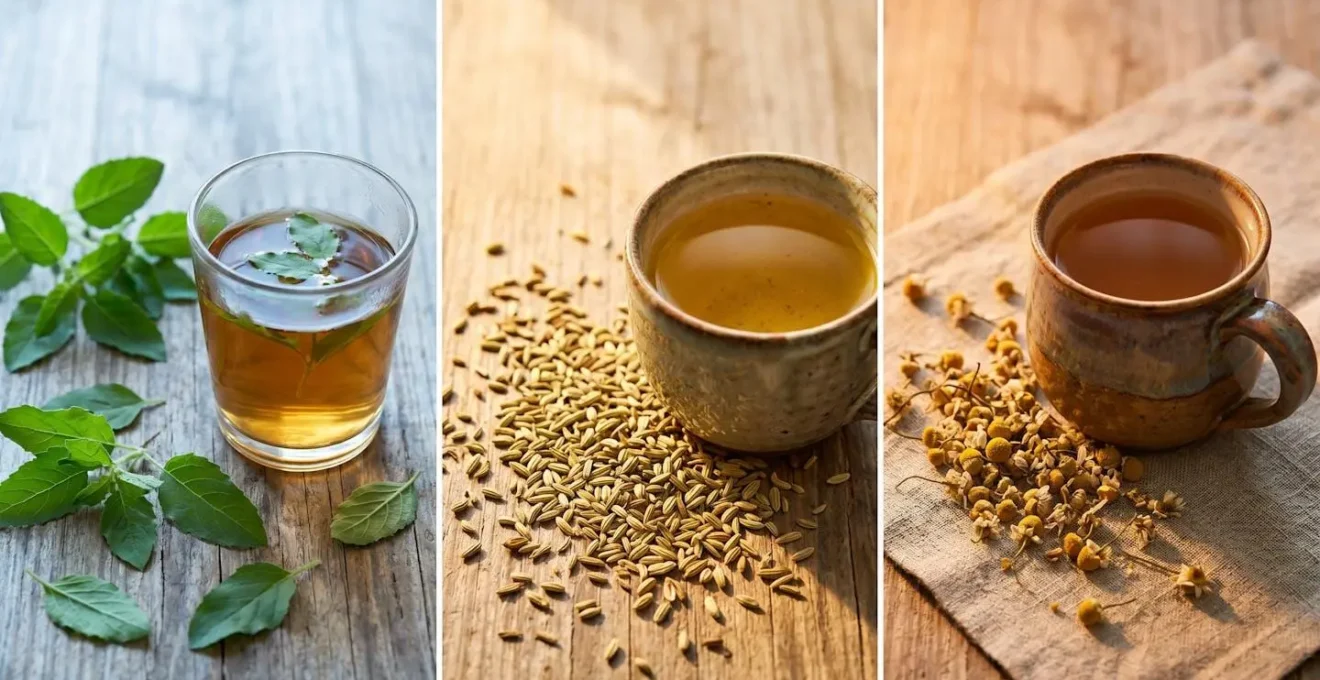
Morning Focus: While many reach for coffee, a standard cup of black tea offers a more balanced stimulation. This is due to L-theanine, an amino acid that promotes a state of calm alertness. As research shows, a typical cup of black tea provides around 20 mg L-theanine, which works synergistically with caffeine to enhance focus without the jitters. For a caffeine-free alternative, Tulsi (Holy Basil) is an excellent adaptogen that supports mental clarity.
Afternoon Digestion: After lunch, when the digestive system is working its hardest, a warming carminative tea can be incredibly supportive. Herbs like fennel, ginger, and cardamom help to dispel gas, reduce bloating, and gently stimulate ‘digestive fire’ (Agni). A cup of ginger tea 30 minutes after a meal can significantly ease feelings of heaviness and support efficient nutrient absorption.
Evening Sleep: As bedtime approaches, the goal is to calm the nervous system. This is where herbs rich in relaxing compounds shine. Chamomile, with its well-studied apigenin, is a classic choice. Another powerful option is Lemon Balm (Melissa officinalis), which contains compounds that work on the GABA receptors in the brain, helping to quiet mental chatter and prepare the body for deep, restorative sleep. These are best consumed about an hour before you intend to sleep.
Do Expensive Loose-Leaf Herbs Work Better Than Supermarket Tea Bags?
The debate between loose-leaf and teabags is often framed around flavour and tradition. Purists argue for the superior quality and taste of whole leaves, while others value the convenience of the bag. However, from a wellness perspective, the difference is far more significant and relates to two key factors: potency and purity.
Firstly, teabags often contain « fannings » or « dust »—the tiny, broken pieces of the herb. These have a larger surface area, which allows for quick colour infusion but also means the volatile oils, the very source of the herb’s therapeutic properties and flavour, evaporate much faster. Whole loose leaves retain these oils until the moment they are crushed and infused, delivering a more potent and aromatic brew. You are getting more of the plant’s active chemistry.
Secondly, and more alarmingly, is the issue of the bag itself. Many modern, silky or pyramid-shaped teabags are made from food-grade plastics like nylon or polypropylene (PP). While they might look premium, they can break down in hot water. In fact, a landmark 2019 study found that steeping a single plastic teabag at brewing temperature (95°C) releases approximately 11.6 billion microplastic and 3.1 billion nanoplastic particles into a single cup.
Case Study: The Hidden Cost of Convenience
A December 2024 study by the Autonomous University of Barcelona went a step further. They analyzed various commercial teabags and found that polypropylene bags were the worst offenders, releasing about 1.2 billion particles per millilitre of water. Crucially, their research demonstrated for the first time that these tiny plastic particles can be absorbed by human intestinal cells. This raises serious questions about the long-term health implications of daily exposure, turning a seemingly healthy habit into a source of microplastic ingestion.
This doesn’t mean all teabags are problematic. Look for unbleached, paper-based bags that are stapled, not glued or heat-sealed. But for maximum potency and purity, switching to loose-leaf herbs and a simple metal infuser is the most reliable wellness choice.
Can You Drink Too Much Peppermint Tea and What Happens if You Do?
Peppermint tea is universally celebrated as a digestive aid, excellent for soothing an upset stomach or easing bloating. Its active compound, menthol, has a relaxing effect on the muscles of the digestive tract. However, this very property can cause problems for a specific group of people, highlighting a key principle of herbalism: bio-individuality. What works for one person can be problematic for another.
For individuals with gastroesophageal reflux disease (GERD) or chronic acid reflux, peppermint tea can actually make symptoms worse. The issue lies with the lower esophageal sphincter (LES), the muscular valve between the esophagus and the stomach. As the American Gastroenterological Association explains, the menthol in peppermint can cause this valve to relax too much.
Peppermint can relax the lower esophageal sphincter, potentially worsening symptoms for individuals with GERD or chronic acid reflux. Menthol relaxes the LES by inhibiting calcium influx in smooth muscle.
– American Gastroenterological Association, AGA Clinical Practice Update 2022 – GERD Management
When the LES is overly relaxed, it can allow stomach acid to flow back up into the esophagus, causing the burning sensation of heartburn. This isn’t just a theoretical risk; studies confirm the effect. A randomized trial found that after drinking peppermint tea post-meal, 40% of GERD patients reported worsened heartburn within 30 minutes, compared to just 10% in the placebo group. For those without GERD, moderate consumption (2-3 cups daily) is generally safe, but it’s a powerful reminder that even natural remedies have specific contraindications.
Your Practical Checklist: Safe Peppermint Tea Consumption
- Start Low, Go Slow: Begin with just half a cup to assess your individual tolerance before increasing your intake.
- Daily Limit: Stick to 2-4 cups per day to avoid potential side effects, even if you don’t have GERD.
- Avoid at Bedtime: If you are prone to any reflux, avoid drinking peppermint tea before lying down, as the supine position makes reflux more likely.
- GERD Precaution: If you have a GERD diagnosis, it’s best to avoid peppermint tea or consume it only very occasionally under medical guidance.
- Medication Timing: To be safe, take peppermint tea at least 2 hours before or after taking other medications, especially blood thinners or sedatives, to prevent potential interactions.
What 5 Dried Herbs Should Every Wellness-Focused Kitchen Contain?
Building a functional herbal tea pantry doesn’t require dozens of exotic ingredients. A curated selection of five key herbs can provide a versatile toolkit to support your well-being through the daily ebb and flow of life. Think of these as your foundational ‘herbal first aid’ for common needs like stress, digestion, and immunity.
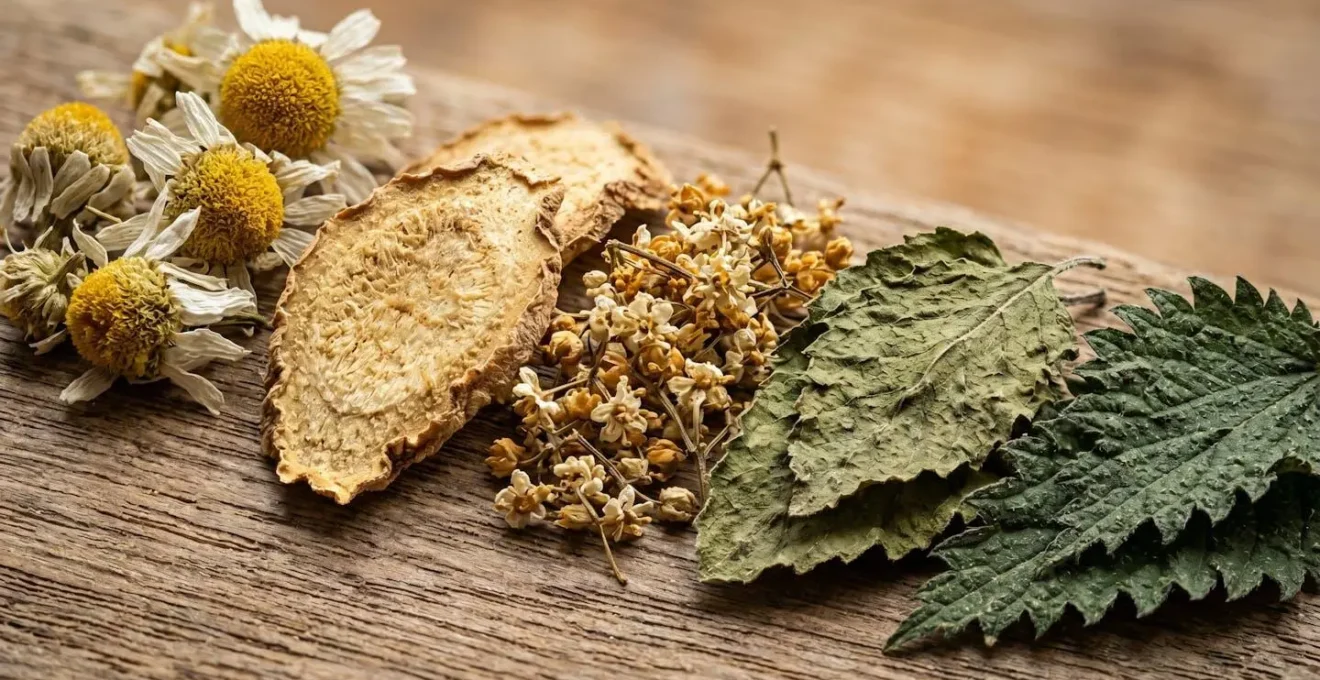
These five herbs cover the most common wellness needs and can be used alone or blended together. Keeping them in airtight, dark glass jars in a cool, dark place will preserve their potency and flavour for up to a year. This simple collection transforms your kitchen cupboard into a responsive, personal apothecary.
- The Relaxer – Lemon Balm (Melissa officinalis): A gentle yet effective nervine from the mint family. It contains rosmarinic acid, which helps modulate GABA receptors in the brain, promoting a sense of calm without sedation. It’s perfect for easing daytime anxiety or pairing with chamomile for enhanced sleep support.
- The Digestif – Ginger (Zingiber officinale): This warming root is a non-negotiable. Its active compound, gingerol, is a powerful anti-inflammatory and pro-kinetic, meaning it helps move food through the digestive system. It’s highly effective for nausea and indigestion and synergises beautifully with other warming spices.
- The Immunizer – Elderflower (Sambucus nigra): While elderberry gets most of the attention, the delicate flowers are a potent tool for the cold and flu season. Rich in flavonoids with antiviral properties, an infusion of elderflower can help with feverish conditions and respiratory congestion. It’s a traditional European remedy with growing scientific support.
- The Adaptogen – Tulsi/Holy Basil (Ocimum sanctum): A cornerstone of Ayurvedic medicine, this adaptogenic herb helps the body become more resilient to stress over time by modulating cortisol levels. It supports both mental clarity and immune function, making it a perfect daily tea for building long-term resilience.
- The Cleanser – Nettle (Urtica dioica): Often seen as a pesky weed, nettle is a nutritional powerhouse. Rich in minerals like iron and calcium, its leaves have a mild diuretic action, supporting the body’s natural detoxification processes via the kidneys. It’s an ideal ‘spring cleaning’ tea to support skin and joint health.
How to Follow Ayurvedic Seasonal Eating in a British Climate With British Foods?
Ayurveda, the ancient Indian science of health, places huge emphasis on eating and drinking in harmony with the seasons to maintain balance. This can seem daunting in a British climate, where the seasons and available foods differ greatly from those in India. However, the core principles of Ayurveda are universal and can be brilliantly applied using local herbs and foods. The key is to understand the *qualities* of each season and use teas to provide the opposing, balancing quality.
For example, a British autumn is characterized by cold, dry, and windy weather—qualities that aggravate the ‘Vata’ dosha, leading to feelings of anxiety, dryness, and instability. The Ayurvedic solution is to introduce warmth, moisture, and grounding qualities. This doesn’t require exotic ingredients; it can be achieved perfectly with a cup of tea made from classic warming spices like ginger, cinnamon, and clove.
This principle of « functional translation » allows us to create an Ayurvedic tea ritual that is perfectly suited to the Western seasons, as this table illustrates:
| Season (Dosha) | Climate Qualities | Balancing Principle | Recommended Tea Herbs (Western) | Active Mechanism |
|---|---|---|---|---|
| Autumn/Early Winter (Vata) | Cold, dry, windy | Warm, moist, grounding | Ginger, Cinnamon, Clove, Cardamom | Warming spices increase circulation and stimulate digestive enzymes (Agni) |
| Late Winter/Spring (Kapha) | Cold, damp, heavy | Warm, dry, stimulating | Nettle, Dandelion Root, Ginger, Black Pepper | Bitter and pungent herbs support detoxification and lymphatic drainage |
| Summer (Pitta) | Hot, intense, sharp | Cool, soothing, calming | Peppermint, Hibiscus, Rose, Chamomile | Cooling herbs reduce inflammation and calm the nervous system |
| Indian Summer/Transition | Variable, unstable | Grounding, adaptogenic | Tulsi, Licorice Root, Fennel | Adaptogens help the body adjust to seasonal transitions |
By focusing on the principles rather than the specific ingredients, you can practice Ayurvedic wisdom authentically and effectively, right from your British kitchen. It’s about observing the weather outside your window and choosing a brew that brings your inner climate back into balance.
How to Practice Mindfulness While Making Tea Without Adding Any Extra Time?
The advice to « be more mindful » can often feel like another task on an already long to-do list. The beauty of a tea ritual is that it offers a built-in opportunity for a mindfulness practice that requires zero extra time. The few minutes it takes for the kettle to boil and the tea to steep become your meditation. The trick is to use ‘sensory anchors’ to pull your attention away from your racing thoughts and into the present moment.
This isn’t just a mental trick; it has a physiological basis. The L-theanine present in tea has been shown to increase alpha brain wave activity, which is associated with a state of relaxed wakefulness—the very state you are trying to cultivate in meditation. As one review on tea and cognition found, L-theanine reinforces relaxation even in the presence of stimulants. This makes the act of making tea a uniquely powerful vehicle for mindfulness.
50 mg L-theanine (equivalent to 2-3 cups of tea) increased alpha brain wave activity, indicating that it improved attention and mental arousal. L-theanine reinforced relaxation by attenuating caffeine-induced stimulation.
– Tea and cognition research team, Journal of Human Nutrition – Tea Drinking: A Systematic Review of RCTs Focusing on Human Cognition
Instead of letting your mind wander to your inbox or your worries, you anchor it to the physical sensations of the process. This turns a mundane act into a restorative micro-break.
Your 4-Step Sensory Anchoring Tea Ritual
- SOUND Anchor (0-30 seconds): As the kettle heats, close your eyes and focus only on the sound. Notice the initial hum, the first bubbles, and how the pitch changes as it nears the boil. This simple act engages the auditory cortex and begins to quiet the mind.
- SCENT Anchor (30-60 seconds): When you open your tin of loose-leaf herbs, bring it to your nose and take three slow, deliberate breaths. Try to identify the specific notes—is it earthy, floral, spicy, or citrusy? The olfactory bulb has a direct link to the brain’s limbic system, instantly affecting mood and stress levels.
- SIGHT Anchor (3-5 minutes during steeping): As your tea infuses, watch it. Don’t check your phone. Observe the colour as it seeps from the leaves, the dance of the herbs in the water, the gradual transformation. This becomes your ‘analogue’ timer, a visual meditation that keeps you present.
- TOUCH Anchor (final step): Before you take the first sip, wrap both hands around the warm mug. Feel the heat transferring to your palms, the weight and texture of the cup. This final anchor grounds you in the physical reality of the moment, completing the cycle of sensory awareness.
Key Takeaways
- The wellness benefits of herbal teas are rooted in verifiable science, with compounds like Apigenin and L-theanine having measurable effects on the body’s systems for stress and focus.
- The physical form and container of your tea matter profoundly; loose-leaf herbs offer greater potency, while avoiding plastic teabags reduces your intake of microplastics.
- The ritual is as important as the herb. By timing your teas to your body’s rhythm and using the preparation process as a mindfulness practice, you can amplify the wellness benefits without adding extra time to your day.
Why Does Ayurveda Say Cold Smoothies Are Bad When Modern Nutrition Says They Are Healthy?
One of the most common points of confusion when exploring traditional wellness is the clash between ancient wisdom and modern nutritional trends. A prime example is the cold smoothie: celebrated in the West as a nutrient-dense health food, but viewed with caution by Ayurveda, which often advises against cold, raw, and blended foods, especially for breakfast.
This isn’t a contradiction; it’s a difference in perspective. Modern nutrition primarily focuses on the macronutrient and micronutrient content of food—vitamins, minerals, fibre, protein. From this viewpoint, a smoothie packed with spinach, fruit, and protein powder is undeniably healthy.
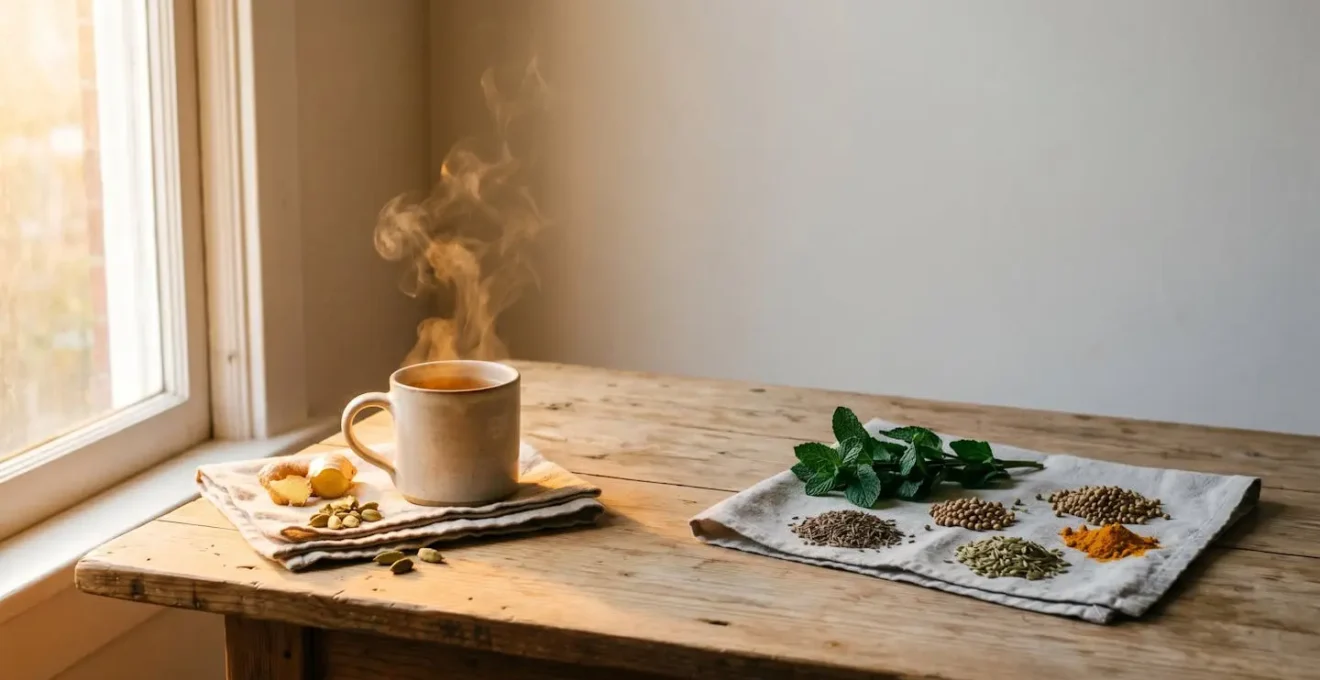
Ayurveda, however, looks at food through a different lens: its energetic qualities and its effect on ‘Agni’, or the digestive fire. Agni is the metabolic energy that governs all transformation in the body, from digesting food to processing thoughts. A strong Agni is considered the cornerstone of good health. From this perspective, cold and raw foods are much harder for the body to break down. They require the body to expend its own energy to ‘heat up’ the food to body temperature before digestion can even begin. This is seen as « dampening the digestive fire. »
A warm, cooked meal or a warm herbal tea, on the other hand, is considered pre-digested to an extent. It arrives in the stomach at a temperature that supports, rather than hinders, the digestive process. For someone with a robust, fiery digestion, a cold smoothie might be fine. But for someone with a weaker or more sensitive digestive system (a ‘low Agni’), starting the day with an icy blend can lead to bloating, gas, and a feeling of sluggishness, despite the impeccable nutrient profile of the ingredients. Ayurveda prioritises making nutrients easy to absorb over simply making them available.
Your next cup of tea is an opportunity. Start today by choosing one principle from this guide—whether it’s timing your brew, practising a sensory anchor, or simply choosing loose-leaf—and transform your daily ritual into a deliberate act of wellness.