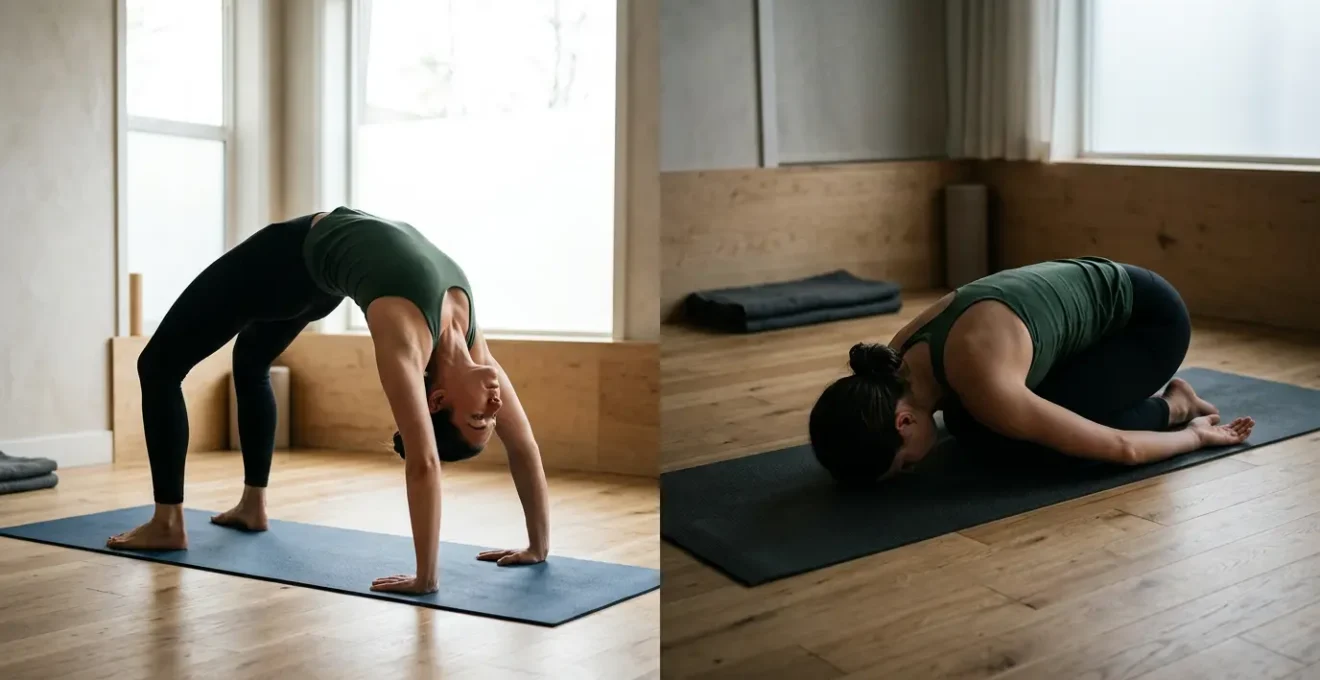
Contrary to popular belief, the goal of yoga isn’t to always feel a blissful « buzz »; it’s about learning to intelligently manage your nervous system.
- The energetic « high » or « crash » you feel is a direct reflection of whether a practice has stimulated or soothed your autonomic nervous system.
- Feeling empty despite perfect poses often means the practice is missing the deeper limbs of yoga that cultivate internal awareness over external achievement.
Recommendation: Shift your focus from chasing sensations to diagnosing your energetic state before practice and choosing styles that bring you back to balance.
Have you ever walked out of a yoga class feeling like you’re floating on a cloud, brimming with a vibrant, calm energy? And then, the following week, left a different class feeling strangely depleted, irritable, or so “wired” you couldn’t focus? This inconsistency is a common experience for many practitioners. You might be told to simply « listen to your body, » but without a clear framework, that advice can feel abstract and unhelpful. The conventional wisdom often points to physical exertion or hydration, but it rarely addresses the root of the issue.
The truth is, these varied responses aren’t random. They are predictable outcomes based on how different yogic techniques interact with your body’s most sophisticated control panel: the autonomic nervous system. The buzzing, serene, or depleted sensations are not mystical phenomena but tangible feedback about your internal energetic state. Understanding this dynamic is the key to transforming your practice from a hit-or-miss experience into a reliable tool for self-regulation.
But what if the real secret to a fulfilling practice isn’t about chasing a specific feeling, but about becoming a skillful manager of your own energy? This guide moves beyond mystical explanations to offer a practical, science-backed framework. We will explore how to diagnose your energetic state, understand the physiological effects of different practices, and avoid the common pitfall of turning your practice into a quest for a « yoga high. » By the end, you will have the clarity to consciously choose the right practice, for the right reason, at the right time.
This article provides a clear roadmap to understanding and mastering your energetic response to yoga. Below is a summary of the key areas we will explore to help you cultivate a more balanced and intentional practice.
Contents: Understanding Your Energetic Response in Yoga
- What Are Chakras and Energy Channels? A Non-Mystical Explanation for Sceptics
- How Can Physical Fatigue Indicate Energetic Depletion Rather Than Just Tiredness?
- Which Yoga Practices Build Energy, Which Circulate It and Which Calm It Down?
- When Seeking Energy Sensations Becomes a Distraction from Genuine Practice Progress
- How to Ground Yourself After a Practice That Leaves You Too Wired to Function?
- What Are the 6 Limbs of Yoga Most Western Practitioners Never Explore?
- What Is Actually Happening in Your Body When You Feel Wired but Tired?
- Why Does Your Yoga Practice Feel Empty Even When Your Poses Are Perfect?
What Are Chakras and Energy Channels? A Non-Mystical Explanation for Sceptics
For many, the concepts of chakras (energy centres) and nadis (energy channels) can seem esoteric or purely metaphorical. However, we can understand these traditional ideas through a modern, physiological lens. Think of the chakra system not as spinning wheels of light, but as a map of the body’s major nerve plexuses and their corresponding hormonal glands. In fact, each of the 7 major chakras is directly linked to a specific gland in the endocrine system, which regulates everything from metabolism to mood.
Similarly, the primary energy channels, or nadis, can be understood as pathways of the autonomic nervous system (ANS). The ANS has two main branches that function like the body’s gas and brake pedals. The most famous nadis, Ida and Pingala, run along the spinal column and map almost perfectly onto these two branches. As the experts at Yogveda explain, this connection is fundamental to understanding yoga’s effects:
Ida, which is associated with the moon and the feminine, is said to be associated with the parasympathetic nervous system and is said to promote calmness and mental balance. Pingala, which is associated with the sun and the masculine, is said to be associated with the sympathetic nervous system and is said to promote energy and activity.
So, when a yoga practice aims to « balance your energy, » it’s often using breath and posture to influence the activity of these two nervous system branches. A practice that feels « buzzing » has likely stimulated the sympathetic nervous system (Pingala), while one that leaves you feeling deeply calm has activated the parasympathetic nervous system (Ida). Viewing these concepts through a physiological framework removes the mysticism and turns them into practical tools for self-regulation.
How Can Physical Fatigue Indicate Energetic Depletion Rather Than Just Tiredness?
It’s crucial to learn the difference between healthy, physical tiredness and a deeper energetic depletion. The first is a sign of a productive workout, while the second is a warning that you’ve overdrawn your energetic bank account. Physical fatigue is straightforward: your muscles ache from use, you feel sleepy, and a good night’s rest leaves you feeling restored. It’s the satisfying soreness after a challenging but appropriate practice.
Energetic depletion, however, feels qualitatively different. It’s a sense of being hollow, disconnected, and mentally foggy. You might feel irritable or emotionally fragile. Instead of a pleasant sleepiness, you experience the frustrating « wired but tired » state where your mind races even though your body is exhausted. Crucially, sleep often doesn’t feel restorative, and you wake up feeling just as drained. This type of fatigue signals that a practice has pushed your nervous system past its capacity, rather than just challenging your muscles.

Learning to recognize these signs is the first step in becoming an intelligent manager of your energy. Paying attention to your breath during practice is a powerful diagnostic tool. When your breathing becomes strained, jagged, or you have to force it, it’s a clear signal that you are crossing the line from healthy effort into nervous system strain. This is the moment to modify, slow down, or switch to a more restorative pose. Ignoring these signals is what leads to post-practice depletion.
Which Yoga Practices Build Energy, Which Circulate It and Which Calm It Down?
Once you can diagnose your energetic state, you need a toolkit of practices to respond effectively. Not all yoga is created equal; different styles and techniques have distinct effects on the nervous system. We can group them into three main categories: those that build energy, those that circulate it, and those that calm it down. Understanding these categories allows you to choose a practice that serves your needs, rather than one that might accidentally push you further into imbalance.
Practices that build energy are designed to stimulate the sympathetic nervous system (SNS), your body’s « gas pedal. » These include vigorous breathing techniques like Kapalabhati (Breath of Fire), dynamic backbends, and fast-paced Power Yoga flows. They increase heart rate, generate heat, and create that « buzzing » feeling. These are ideal when you feel sluggish or need a boost.
Practices that circulate energy aim to release stagnation and create a sense of fluid movement. They often balance activation with release. Vinyasa flows, which link breath to movement, and twisting postures are prime examples. They act like a « pump » for the lymphatic and circulatory systems, helping to clear mental fog and physical stiffness without being overly stimulating.
Finally, practices that calm energy are designed to activate the parasympathetic nervous system (PNS), your body’s « brake pedal. » As studies demonstrate, restorative poses and specific breathwork activate the parasympathetic response, promoting the « rest and digest » state. This includes long-held forward folds, gentle hip openers, Yoga Nidra (yogic sleep), and any practice where the exhale is intentionally lengthened. These are essential when you feel stressed, anxious, or « wired but tired. »
The following table, based on an analysis of nervous system effects, breaks down these categories to help guide your choice of practice.
| Practice Type | Physiological Mechanism | Nervous System Effect | Examples |
|---|---|---|---|
| Building Energy | Stimulates sympathetic nervous system, increases metabolic rate | Activation, heat, ‘buzz’ | Kapalabhati pranayama, backbends, power yoga |
| Circulating Energy | Creates ‘pump’ action for lymph and blood, releases stagnation | Dynamic flow, movement | Vinyasa flow, twists, sun salutations |
| Calming Energy | Activates vagus nerve, parasympathetic response | Rest and digest, cooling | Long-hold forward folds, Yoga Nidra, restorative poses |
When Seeking Energy Sensations Becomes a Distraction from Genuine Practice Progress
While understanding energetic effects is useful, it can also lead to a subtle trap: chasing the « yoga high. » When we start labeling practices as « good » only if they produce a specific buzzing or blissful feeling, we risk falling into a pattern known as spiritual materialism. This is the ego’s tendency to co-opt spiritual practices for its own gain, turning a path of self-inquiry into a quest for pleasant experiences or a badge of spiritual achievement.
This focus on sensation-seeking can undermine genuine progress. Instead of cultivating stable awareness through all of life’s ups and downs, we become attached to a particular state. We might over-practice stimulating styles to constantly feel energized, leading to burnout. Or we might judge a quiet, subtle practice as « boring » because it didn’t deliver a dramatic sensory payoff. The practice becomes less about presence and more about performance and consumption.
Case Study: The Trap of Chasing the ‘Yoga High’
The term ‘spiritual materialism’ was coined by Tibetan meditation master Chogyam Trungpa to describe the ego’s subtle distortion of the spiritual path. It manifests in yoga when a practitioner believes there is a preferred state of mind (like euphoria or intense bliss) and then uses their practice to constantly achieve or maintain it. This can lead to a sense of spiritual superiority or frustration when the desired « high » isn’t achieved. As noted in analyses of this concept, the ego attempts to claim ownership over spiritual insights and milestones, turning a journey of liberation into one of acquisition. The goal shifts from transcending the ego to decorating it with spiritual experiences.
The true aim of practice is not to feel good all the time, but to get good at feeling. This means developing the capacity to be with all sensations—pleasant, unpleasant, and neutral—without attachment or aversion. A practice that feels quiet, challenging, or even frustrating can be just as valuable as a blissful one if it teaches you patience, resilience, and self-compassion. Progress isn’t measured by the intensity of the buzz, but by the steadiness of your mind and the openness of your heart, both on and off the mat.
How to Ground Yourself After a Practice That Leaves You Too Wired to Function?
Sometimes, despite our best intentions, we misjudge our needs and end up in a practice that leaves us overstimulated—the classic « wired but tired » state. Your body is exhausted, but your mind is racing, making it impossible to relax or focus. In these moments, you need a clear protocol to help your nervous system down-regulate and find its way back to a grounded state. This is not the time to push through; it’s the time for a conscious and gentle transition.
The most common mistake is rushing out of the studio and straight back into a stimulating environment—checking your phone, jumping into traffic, or tackling a demanding to-do list. This is like flooring the gas pedal when the engine is already overheating. Instead, the key is to create a « sacred buffer zone » immediately after your practice. This is a dedicated 10-15 minute period for intentional down-regulation, using simple sensory inputs to signal to your body that it is safe to shift from the sympathetic (fight-or-flight) to the parasympathetic (rest-and-digest) state.
This involves engaging the senses in a calming way. Simple actions like mindfully sipping a warm, non-caffeinated tea, taking a slow, silent walk, or applying gentle pressure through self-massage can be incredibly effective. The goal is to provide your nervous system with proprioceptive (body awareness), tactile (touch), or olfactory (smell) inputs that are inherently grounding. Combining this with breathwork, specifically extending the exhale, manually activates the vagus nerve and puts the brakes on the stress response.
Your 5-Step Grounding Protocol: A Post-Practice Checklist
- Create a Digital-Free Buffer: For 15 minutes post-practice, resist all urges to check your phone, email, or social media. This is the most crucial step to prevent further stimulation.
- Engage in Mindful Transition: Instead of rushing, perform a simple, slow ritual. Mindfully drink a cup of herbal tea or take a silent walk around the block, focusing on the feeling of your feet on the ground.
- Apply Grounding Pressure (Proprioception): Stand or sit and firmly press the soles of your feet into the floor. Feel the connection to the earth. You can also use a weighted blanket or give yourself a firm hug to provide calming tactile input.
- Use Scent (Olfaction): If available, use a grounding essential oil scent like vetiver, sandalwood, or cedarwood. Place a drop on your palms, rub them together, and inhale deeply for several breaths.
- Implement 1:2 Ratio Breathing: Manually activate your parasympathetic response. Inhale through your nose for a count of 4, and exhale slowly through your nose or pursed lips for a count of 8. Repeat for 5-10 rounds.
What Are the 6 Limbs of Yoga Most Western Practitioners Never Explore?
If your yoga practice consistently feels physically demanding but emotionally or spiritually hollow, the reason may lie in what’s being left out. According to research, the physical postures (asanas) that are commonly associated with yoga are just one aspect of the practice, yet most Western studios focus primarily on this single dimension. This is like trying to build a house by focusing only on the exterior paint while ignoring the foundation, plumbing, and electrical wiring.
The classical system of yoga, as outlined in Patanjali’s Yoga Sutras, presents an eight-limbed path. Asana is only the third limb. The first two limbs are the Yamas (ethical restraints) and Niyamas (observances). These form the ethical foundation of the practice, guiding how we interact with the world and ourselves. They include principles like non-harm (ahimsa), truthfulness (satya), and contentment (santosha). When we jump straight to asana without this groundwork, the practice can become self-serving and ego-driven.
The fourth limb, Pranayama (breath control), is often included in classes but is a deep science in itself. Beyond Asana and Pranayama lie four deeper, internal limbs that are rarely taught explicitly in a typical Vinyasa class:
- Pratyahara (Sense Withdrawal): The conscious drawing of one’s awareness inward, away from external distractions.
- Dharana (Concentration): The ability to hold the mind’s focus on a single point or object.
- Dhyana (Meditation): A state of sustained, unbroken awareness where the distinction between observer and observed begins to dissolve.
- Samadhi (Absorption): A state of profound union or blissful absorption with the object of meditation.
When a practice neglects this complete framework, it can feel like a beautiful but empty shell—physically perfected, but lacking the internal depth that leads to lasting peace and self-understanding.
What Is Actually Happening in Your Body When You Feel Wired but Tired?
The paradoxical state of feeling « wired but tired » is a hallmark of a dysregulated nervous system and chronic stress. It’s not just a feeling; it’s a clear physiological state driven by your body’s stress response system, primarily the Hypothalamic-Pituitary-Adrenal (HPA) axis. When you’re under stress—whether from a demanding job, emotional turmoil, or an overly intense yoga practice—the HPA axis signals your adrenal glands to release stress hormones like cortisol.
In the short term, cortisol is helpful. It provides a burst of energy to deal with a threat. However, when stress is chronic, cortisol levels remain elevated. This keeps your sympathetic nervous system (the « gas pedal ») in a state of high alert, creating that « wired » feeling of anxiety and restlessness. At the same time, your body’s actual energy reserves are being depleted by this constant state of emergency, leading to deep physical and mental exhaustion. Your body is screaming for rest, but the stress hormones are overriding the signal, keeping you stuck in an exhausting state of hyper-arousal.
This state also promotes inflammation. As the National Center for Biotechnology Information reports, overactivity of the SNS contributes to a pro-inflammatory state in the body. Fortunately, yoga can be a powerful antidote. By activating the parasympathetic nervous system, practices like restorative yoga and breathwork can directly counteract this. Growing evidence suggests that yoga acts on the HPA axis to down-regulate the production of stress hormones, effectively helping your body to apply the brakes and shift out of a chronic stress state. This allows for genuine rest and recovery, resolving the « wired but tired » paradox.
Key Takeaways
- Your energetic response to yoga is not mystical; it’s a direct reflection of your nervous system’s state of activation (sympathetic) or calm (parasympathetic).
- Learn to diagnose your state: differentiate between healthy physical fatigue and draining energetic depletion, which often manifests as being « wired but tired. »
- Instead of chasing a « yoga high, » choose your practice based on your needs: use vigorous styles to build energy, flows to circulate it, and restorative poses to calm and ground it.
Why Does Your Yoga Practice Feel Empty Even When Your Poses Are Perfect?
You can hold a flawless handstand, fold into a perfect forward bend, and transition with gymnastic grace, yet still walk away from your mat feeling a profound sense of emptiness. This frustrating experience often arises when the practice is treated as an external performance rather than an internal, interoceptive journey. When the primary focus is on the aesthetic of the pose—how it looks from the outside—yoga becomes a physical act that can completely bypass the internal felt experience.
True yoga philosophy emphasizes that the practice is a tool for cultivating interoception—the awareness of inner bodily sensations. The physical postures are not the goal in themselves; they are containers designed to help you explore your internal landscape, release tension, and steady the mind. As one analysis on the topic puts it, a practice without this clear embodied intention is like a beautifully built ship without a rudder—technically perfect but ultimately directionless and meaningless.
This emptiness is a sign that the practice is stuck at the level of asana (the third limb) and has become disconnected from its deeper purpose. The ultimate goal of yoga is not a perfect pose, but a more integrated and aware self. This requires engaging with the other limbs, such as pratyahara (turning the senses inward) and dharana (concentration). It means valuing the subtle internal shifts over the dramatic external shapes. When the intention shifts from « how does this pose look? » to « how does this pose feel, right now, in my body? », the practice transforms from a workout into a profound act of self-inquiry, filling the void that perfect alignment never could.
Start applying this new lens of nervous system awareness to your next practice. Before you unroll your mat, take a moment to diagnose your state, and choose a practice that will guide you toward balance, not just another sensation.